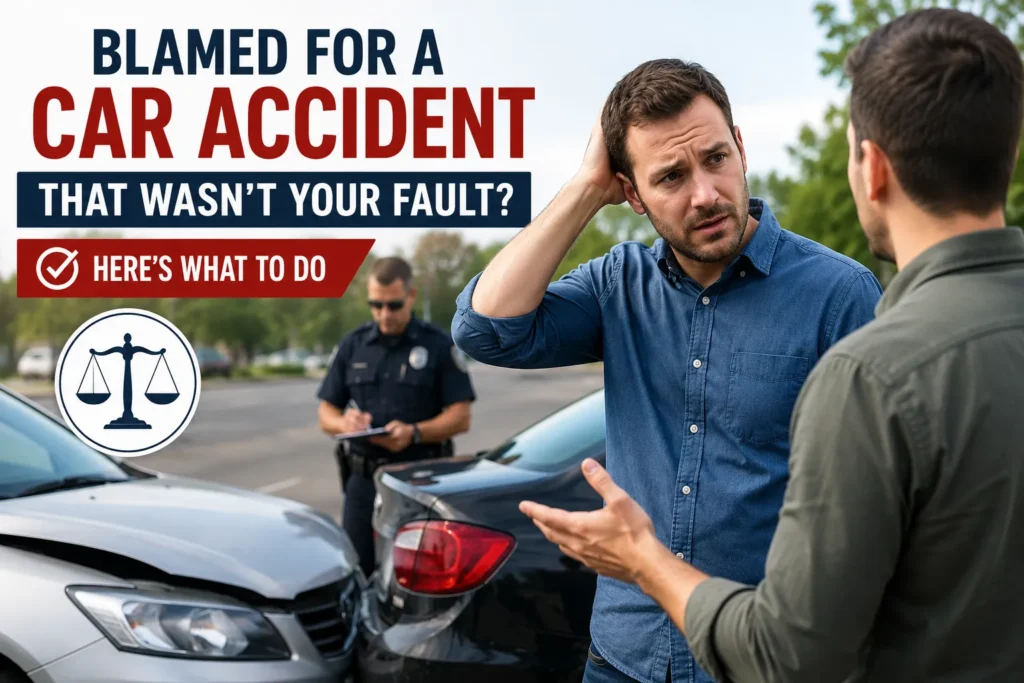
When someone else is at fault and blaming you, it can be stressful, particularly if the other party or their insurance provider argues with you. If you feel that the car accident not my fault situation has been miscalculated, it’s crucial that you take the appropriate measures early to safeguard your stance.
Several factors can impact assessing fault in an accident, including details of the accident, evidence, and local laws. Knowing what to record, what to say and what to do, can help make the process easier.
What Should You Do If You Are Blamed for an Accident?
If you are blamed for car accident not my fault that wasn’t my fault, try to remain calm and avoid making statements that could be interpreted as admitting responsibility.
Aerial photographs of vehicles and accident scenes.
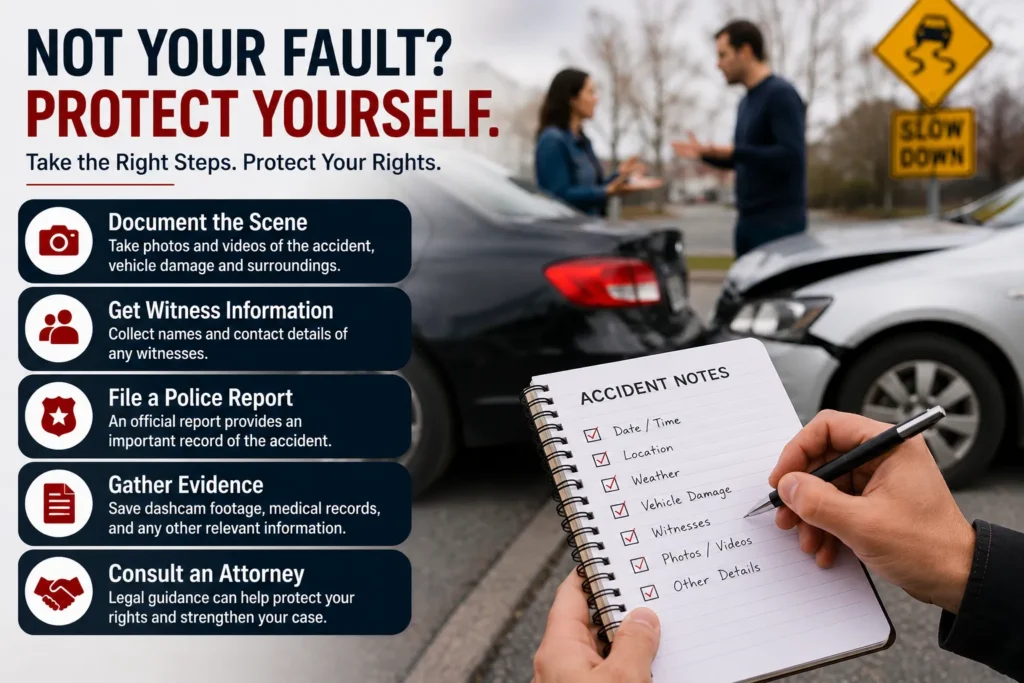
- The contact details of witnesses
- Police reports (if available)
- Insurance information
- Medical records and bills (if injuries have occurred)
- Videos from a dashcam or security camera
The easier it may be to determine what occurred, the more accurate the information available.
How is Fault Determined After a Car Accident?
Inspecting the actions of all the drivers, traffic laws, physical damage, witness statements, police reports and other available evidence can be required for determining fault.
An insurance company can investigate a car accident not your fault before deciding on a settlement. In some instances, more than one driver might be responsible for a percentage.
Fault can also differ based on location of accident.
What Evidence Can Help Prove Fault?
Having evidence in a car accident not my fault can help prove how the accident occurred and can help support your version.
There are a variety of useful evidences that may be included, such as:
- Images of the incident taken by the public and police
- Dashcam footage
- Traffic camera recordings
- Witness statements
- Police reports
- Vehicle damage
- Accident reconstruction reports
- If applicable, provide medical records
Make an effort to keep evidence as early as possible, as some video recording or other information might not be available in the future.
How to Dispute Fault in a Car Accident
If you are dealing with a car accident not my fault claim, knowing how to dispute fault in a car accident can help you take the appropriate steps when you disagree with a fault decision.
Consider discussing the reasons for making the decision. Keep copies of all photos, reports, e-mails, etc. and add any other evidence that might have been missed.
Under certain conditions, it may also be worthwhile to consult with a lawyer regarding the legal possibilities in your jurisdiction.
Should You Admit Fault at the Accident Scene?
Avoid guessing about who was responsible for the accident or make statements that might be interpreted as taking responsibility for the accident before all the facts are known.
Give correct details to police, fire and insurance companies. Don’t speculate on what went wrong and who is at fault.
An investigation can reveal information that is not obvious following an accident.
What Happens If You Are Found at Fault?
Knowing the consequences of being in a car accident not my fault can help you as it can influence insurance claims and financial liabilities.
It will depend on local law, insurance coverage, property damage, injuries and if there is any other driver who is also responsible.
If the decision is wrong, review the evidence and inquire about how the challenge of a determination is made.
What If the Other Driver Gives a Different Version of Events?
Frequently drivers will recall or describe an accident in a different manner. Independent evidence can be really useful at this point.
The use of pictures, witness statements, video, vehicle damage and official reports can help to paint a more complete picture of what happened. Do not argue with the other driver or try to get the other person to retract their statement.
When Should You Consider Speaking With a Lawyer?
An insurance claim, problems determining liability, multiple vehicles, and/or serious injuries may warrant legal assistance. An experienced attorney will be able to examine the situation and inform you of what laws might apply to your case.
Conclusion
It can be difficult to accept that you are responsible for an accident that you did not cause, but this can be greatly helped if you have paperwork and evidence. If there is a dispute regarding a car accident not my fault claim, keep information, give accurate details and know what options you have for challenging a fault decision.
The best answer typically relies on facts and not arguments. What happened can be determined by photos, reports, witness information and other evidence that is available.
Frequently Asked Questions
What should I do if I am blamed for a car accident that was not my fault?
Remain calm; don’t accept responsibilities; document the scene of the accident; obtain witness information, report the accident to your insurance company, and keep any evidence which may help determine the cause of the accident.
How is fault determined after a car accident?
Fault can be assessed based on traffic laws, driver conduct, police reports, witness statements, photos, videos, vehicle damage and other evidence available concerning the collision.
What evidence can prove fault in a car accident?
Photos from the scene of the accident, dashcam footage, traffic camera videos, witness statements and police reports, vehicle damage and other records that provide useful information about the accident can be submitted as evidence.
How can I dispute fault in a car accident?
You can check the facts behind the fault decision, submit further supporting facts, correct incorrect information and request the insurance company to discuss its dispute/review process.
Should I admit fault after a car accident?
When telling the truth, it’s best to avoid any guesswork or assumptions of responsibility. Fault might be based on evidence and circumstance that are not apparent at the scene.
What happens if I am found at fault in a car accident?
This can vary depending on coverage, ordinances, damage, injuries and liability. Fault may have an impact on claims and financial responsibility.
Can both drivers be partially at fault for a car accident?
Yes, under certain conditions and under certain laws, there could be more than one driver who gets a percentage share of responsibility for a collision.
Can a police report help prove who caused an accident?
The report from the police can be a valuable resource for information regarding the accident, observations, statements and so forth. But the liability for legal or insurance claims may be different in different jurisdictions.
What should I do if the other driver is lying about the accident?
Don’t argue with the other driver. Rather, give your insurance company or lawyer accurate data and any evidence that’s available, such as photos, videos, witness statements, and official reports.
When should I contact a lawyer after a disputed car accident?
If the responsibility for the accident is in question, injuries are severe, the damages are significant, more than one person was responsible for the accident, or you are not getting the insurance company to cooperate, you might want to seek legal advice.