
In car accident aggravated pre-existing condition settlement, you can file a claim and recover compensation for aggravated injuries when a crash worsens a prior injury. But insurance companies will fight harder. They look for any excuse to pay less.
This guide covers what happens when a car accident aggravated pre-existing condition settlement and what to expect from the process.
The Eggshell Plaintiff Rule
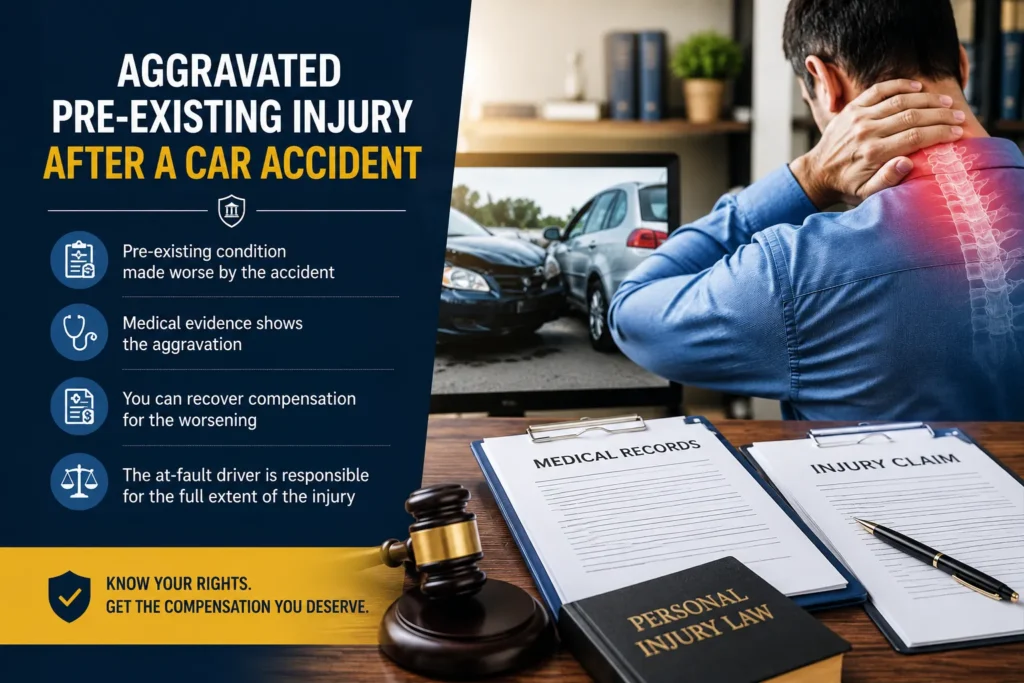
The law does not let a negligent driver off the hook just because someone was more vulnerable. That is called the “eggshell plaintiff” rule. A careless driver is responsible for the full extent of the injury they cause, even if the victim was more fragile than a typical person.
If a rear-end collision aggravates a previously quiet neck issue and triggers months of migraines, the at-fault driver does not get a pass just because the victim was susceptible.
The fight is not about whether the condition existed. It is about whether the crash made it worse in car accident aggravated pre-existing condition settlement.
How Insurers Try to Shrink Your Settlement
Claims adjusters comb through old medical records looking for anything to use against you. A chiropractor visit two years ago for “lumbar discomfort.” A physical therapy note about “occasional radiating pain.” Even a primary care entry about “neck tightness after long hours at the computer.”
Each line becomes ammunition for the argument that your pain is old, not new. The typical playbook looks like this:
– Concede some short-term soft tissue injury
– Propose minimal treatment windows
– Deny long-tail symptoms
– Attack future care as unrelated to the crash
The car accident aggravated pre-existing condition settlement offer reflects a narrow slice of medical bills and a modest nod to discomfort.
What Counts as Aggravation
Aggravation is a medical conclusion built on concrete differences. The strongest claims contain three pillars:
- A clear before-and-after picture: pre existing injury settlement records showing functional stability are powerful. People who rarely sought care before the crash but then poured time and money into treatment look credible .
- Objective medical evidence: New imaging findings such as acute edema on MRI, a fresh disc herniation with nerve root compression, or EMG evidence of radiculopathy all matter. Range-of-motion measurements and consistent exam findings help .
- Provider opinions that use the right language: A record saying “within reasonable medical probability, the collision aggravated underlying degenerative changes” reads differently than a casual note saying “may have worsened” .
Proving Pre-Existing Injury Aggravation
The key is establishing causation. Was the condition aggravated, accelerated, or merely coincidental? Did the collision light up a previously dormant problem, or would the symptoms have emerged anyway? Medical specificity wins these arguments. Not broad appeals to fairness.
Three things to do:
– Tell your lawyer about all prior injuries. Hiding them backfires when records surface
– Get early specialist evaluations. Their notes capture subtleties lost in generalist charts
– Seek functional assessments. Work restrictions and employer accommodations are tangible evidence
Common Car Accident Aggravated Pre-Existing Condition Settlement Cases
Musculoskeletal complaints dominate crash litigation. These are the most common:
Degenerative disc disease – Many adults show disc bulges or arthritic changes on MRI long before any collision. The question is whether the crash converted quiet abnormalities into symptomatic pathology .
Prior neck or pre existing back injury settlement – A person with a history of whiplash or chronic low back pain is not barred from recovering if a new crash worsens the condition. Detail the differences. Pre-accident pain averaged 2 out of 10. Now it is 6 out of 10 with weakness and sleep disturbance.
Knee and shoulder problems – A collision that produces a new tear or a surgery recommendation draws a line between pre-existing tissue wear and post-crash mechanical failure.
Mental health conditions – Anxiety, depression, and PTSD can predate a crash. Trauma can exacerbate them. Therapy notes about new triggers like driving avoidance help separate background from crash-related worsening.
What Damages Can You Recover
Aggravation claims include the same damages as any injury case, but the proof looks different. Medical expenses recover for reasonable treatment made necessary by the crash, even if it targeted a vulnerable area. If surgery accelerated a procedure you might have needed years later, a treating surgeon can explain how the collision moved up the timeline.
Aggravation often changes stamina and reliability. Letters from supervisors, attendance records, and job descriptions provide texture. The parent who can no longer lift a toddler without pain. The bookkeeper whose migraines wreck concentration. Those stories land with juries in car accident aggravated pre-existing condition settlement.
Conclusion
A car accident aggravated pre-existing condition settlement complicates the claim. But it does not end it. The at-fault driver remains responsible for the full harm caused.
Insurance companies will use old medical records against you. Good legal representation uses medical evidence to show the real difference the crash made. Document everything. Be honest about prior injuries. Get specialist evaluations.
The right approach turns a pre-existing condition from a liability into a clear picture of what the collision truly cost.
Frequently Asked Questions
Can you file a claim if a car accident worsens a pre-existing injury?
Yes. A pre-existing condition does not bar recovery. The injured person can seek compensation for aggravation of the prior condition caused by the crash.
How do insurance companies value aggravated injury claims?
Insurers value claims based on the severity of aggravation, medical costs, lost wages, and the strength of evidence linking the crash to the worsening. They often start low and require negotiation.
What is the eggshell plaintiff rule in personal injury law?
It holds a negligent driver responsible for the full extent of the injury caused, even if the victim was more vulnerable than a typical person due to a pre-existing condition.
How does a pre-existing back injury affect settlement?
A pre-existing back injury can reduce settlement value if the insurer argues the symptoms existed before. Strong medical documentation proving the crash made it worse can overcome this.
What documents help prove aggravation of a pre-existing condition?
Pre-accident medical records, post-accident imaging, treating physician opinions using proper causation language, and functional assessments showing changes in daily life.
What does compensation for aggravated injury settlement cover?
It covers additional medical expenses, lost wages, diminished earning capacity, and pain and suffering directly attributable to the aggravation caused by the accident.
Can you get a settlement for aggravated injury without surgery?
Yes. Surgery is not required to recover damages. Significant pain, limited function, and ongoing treatment can support a fair settlement.
What happens if you do not disclose a pre-existing condition?
Non-disclosure damages credibility. Defense subpoenas will uncover prior treatment. Honesty early allows your lawyer to address the issue proactively.
How can a car accident lawyer help with a pre-existing injury car accident claim?
A lawyer gathers medical records, hires experts, challenges insurer arguments, and negotiates a settlement that reflects the true impact of the aggravated injury.
Is a New Jersey car accident lawyer needed for these claims?
New Jersey has specific laws and deadlines for personal injury claims. Local counsel familiar with state procedures is strongly recommended.