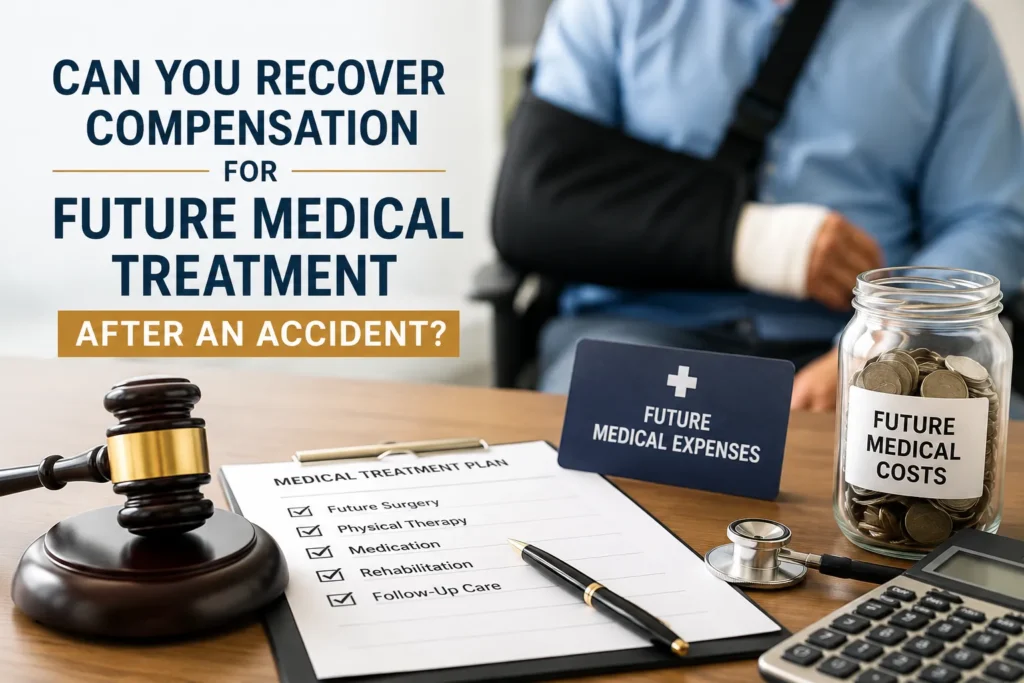
The aftermath of an accident can be a long way from over after the accident, if you are experiencing medical issues. Emergency treatment often takes care of your injury right away, but some people require more treatment, like therapy, medication, repeat visits or surgery, which can be months or years later.
Such future expenses can be a major financial burden. For this reason, future medical costs are a significant component of numerous personal injury cases. If your injuries are likely to need continuing treatment, you might be able to claim compensation for medical expenses you’ll incur later.
Read about possible costs and how they’re determined, and who might be liable to pay them, to help you make informed choices following an accident.
What Are Future Medical Expenses?
The costs of medical care which you will anticipate receiving following an accident claim is known as “future medical expenses”. These costs include treatment not yet received, but which is required based on your injuries.
Examples of Future Medical Expenses
Some of the medical costs that may occur include:
- Future surgeries
- Physical therapy
- Rehabilitation
- Prescription medications
- Specialist visits
- Medical equipment
- Pain management treatment
- Home healthcare services
For instance, if a doctor has determined that a back injury suffered as a result of a car accident may require surgery in the future, the cost of that surgery could be part of your claim.
Medical Expenses After a Car Accident
Expenses for treatment following a car accident are typically recoverable. These costs may be claimed as part of a personal injury case.
A lot of those who are injured in an accident believe that they can only claim the money for their already received bills. But a personal injury lawsuit can encompass both the present and future treatment expenses.
Common Medical Costs Related to a Vehicle Accident
Some typical medical costs related to a vehicle accident are:
- Emergency room treatment
- Ambulance expenses
- Hospital stays
- Medical tests including X-rays and MRIs
- Doctor appointments
- Surgery costs
- Physical therapy
- Prescription medication
- Long-term rehabilitation
Your compensation will be dependent on the extent of your injuries, your insurance coverage and the strength of your case.
Who Pays the Medical Bills After a Car Accident?
One of the most often asked questions following an accident is: Who pays the medical costs after a car accident?
This will depend on your location, insurance policy and who was at fault.
Sources That May Pay Medical Bills
Medical bills can be paid via:
- Health insurance
- Personal Injury Protection (PIP)
- Medical Payments coverage
- The insurance company of the driver who was at fault
- An award for a personal injury case
In many cases, medical providers require payment before medical claims are settled. Knowing what you’re covered for and what you are not will help you to control your costs during the processing of your claim.
Can Future Surgery Be Included in an Accident Settlement?
Absolutely, medical evidence does show that future surgery should be part of an accident settlement, if it is likely to be necessary.
Types of Injuries That May Require Future Surgery
In some cases, the injuries can require future surgical interventions, such as:
- Spinal injuries
- Joint damage
- Severe fractures
- Shoulder or knee injury
To get insurance coverage, you must have evidence that surgery is likely to occur, rather than a possibility. A doctor is required to explain the accident and its connection to the future procedure as well as the approximate treatment cost.
Ongoing Medical Treatment After an Accident
However, chronic medical treatment is essential. But, chronic medical treatment is crucial.
There are injuries that do not completely heal from first aid. Patients may require ongoing medical treatment for pain management and/or to enhance function or quality of life.
Examples of Ongoing Medical Treatment
It may require continuous care such as:
- Regular physical therapy
- Pain management
- Medication
- Specialist appointments
- Additional medical testing
- Mental health treatment
Settlements should not just be based on bills but on future medical requirements as well.
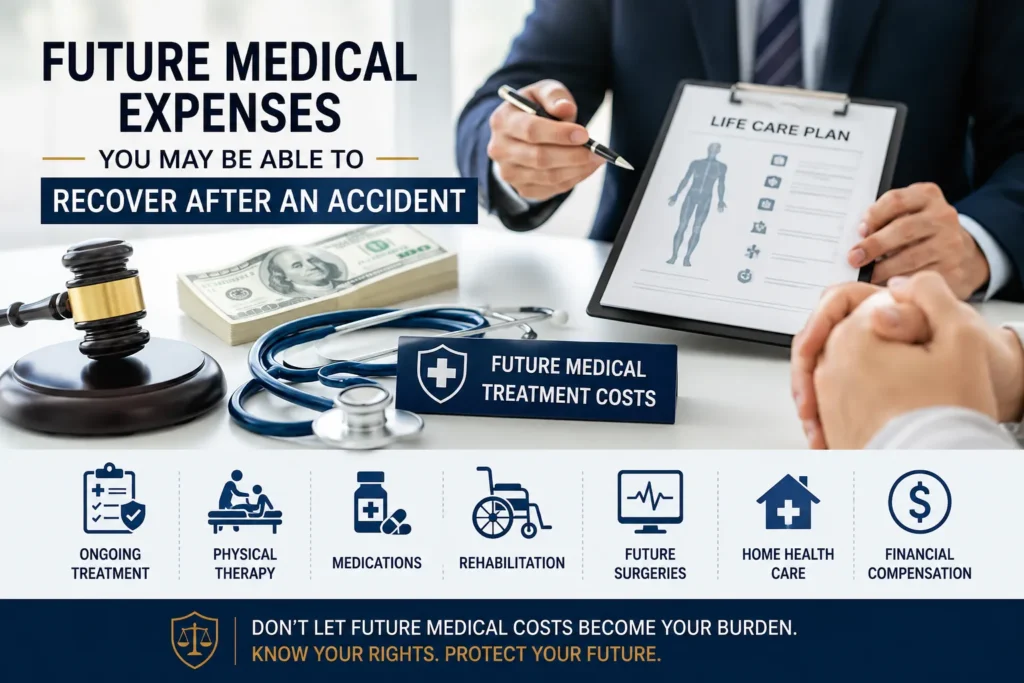
Future Rehabilitation Costs After an Accident
A person may need to be rehabilitated following a serious injury if he or she is not able to resume normal activities or work.
Types of Future Rehabilitation Costs
Future rehabilitation costs may include, but are not limited to:
- Physical rehabilitation
- Occupational therapy
- Speech therapy
- Cognitive therapy
- Vocational assistance
Rehabilitation may be needed for months or even years, depending on the severity of the injury. These expenses are part of an individual injury case so that a victim is not responsible for treating the symptoms of his or her condition.
How Are Future Medical Expenses Calculated?
Many ask, how are future medical expenses calculated?
There is no simple formula. Rather, future costs are determined by examining medical records and projected needs of the injured party.
Factors Used to Calculate Future Medical Expenses
Medical Reports
The doctors examine your injuries and discuss any treatment that you might need in the future.
Treatment Costs
Costs may be estimated in the calculation for the following:
- Surgery
- Therapy
- Medication
- Medical equipment
- Specialist care
Length of Treatment
Some injuries need only short term care while others may take many years to treat. The total amount depends on the expected length of time.
Expert Opinions
Where the case is more complicated, medical professionals, life care planners and financial professionals can assist in the estimation of future expenses.
Personal Injury Medical Expenses
Personal injury medical costs are related to the medical expenses of the injuries sustained in your accident. They do not just have to pay bills related to hospital visits.
Types of Personal Injury Medical Costs
They may include:
- Doctor visits
- Surgery
- Rehabilitation
- Prescription medication
- Medical devices
- Home care
- Follow-up treatment
Having a good medical record, bill history and doctor’s recommendations can serve as a backup to your claim and can assist with substantiation of future medical needs.
Can Insurance Companies Deny Future Medical Expenses?
Future medical expense claims could be disputed by insurance companies since they are for medical treatment that hasn’t yet occurred.
Reasons Insurance Companies May Deny Claims
They might say that:
- Possible future treatment is unknown
- The injury does not involve any of the following:
- The treatment has nothing to do with the accident
- A less expensive option is available
When it is crucial to establish that future care is required, it is important to present strong medical evidence.
Why Medical Documentation Is Important
You must make sure that you have evidence that the expenses are reasonable, and that they are related to the accident, if you want to be able to recover compensation for treatment in the future.
Important Documents for Future Medical Claims
These are some of the important documents that you might have:
- Medical records
- Doctor recommendations
- Treatment plans
- Specialist reports
- Imaging results
The better you can document your future medical needs, the easier you make it for the value of your needs to be proven.
Conclusion:
Injuries can result in expenses that continue past the recovery process. Medical treatment and rehabilitation over the years can be costly. So too can future treatments.
If your injury still requires medical care, you can include the costs of future treatment in a personal injury claim. Knowing your rights and having supporting evidence are necessary to ensure future medical needs will be addressed in your settlement.
The costs of medical treatment you need in the future should be part of a fair settlement. The support provided by a settlement should include the medical care you are likely to need in the future.
Frequently Asked Questions
Can I claim future medical expenses after an accident?
Yes, you may be able to claim compensation for medical treatment you are reasonably expected to need in the future.
What future medical costs can I claim?
Future costs may include surgery, physical therapy, medication, rehabilitation, specialist visits, and medical equipment.
Can future surgery be included in my settlement?
Yes, if medical evidence shows that future surgery is reasonably necessary because of your accident-related injuries.
How are future medical expenses calculated?
They are usually estimated based on medical records, treatment plans, doctor opinions, and expected treatment costs.
Who pays my future medical bills after an accident?
Depending on your case, payment may come from insurance coverage, the at-fault party, or a personal injury settlement.
Can an insurance company deny future medical expenses?
Yes. An insurer may dispute future treatment if there is not enough medical evidence showing that it is necessary and accident-related.
What evidence supports a future medical expense claim?
Medical records, doctor recommendations, treatment plans, specialist reports, and imaging results can help support your claim.