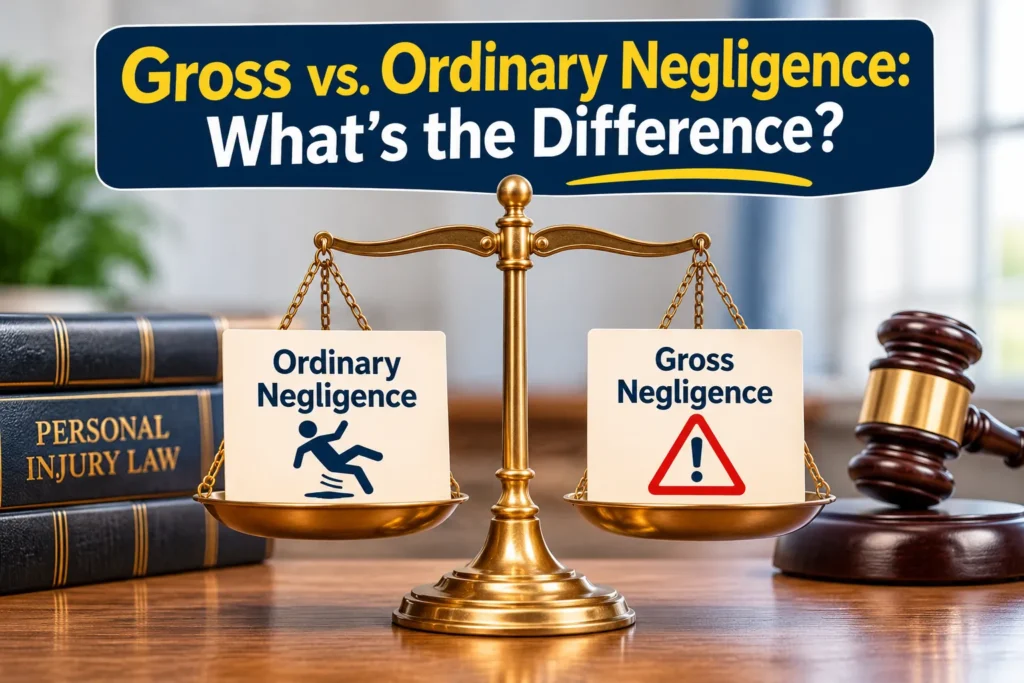
If someone is injured as a result of another individual’s negligence, it could be a negligent act case. However, some carelessness is worse than others. Sometimes, it’s just a simple mistake. At other times, someone fails to notice a danger that might pose serious risks to someone else.
That’s the main difference in ordinary vs gross negligence. Ordinary negligence is when someone is not careful whereas gross negligence is a much more serious lack of care.
What is Ordinary Negligence?
Ordinary negligence happens when someone doesn’t take reasonable care and their actions cause another person to get hurt.
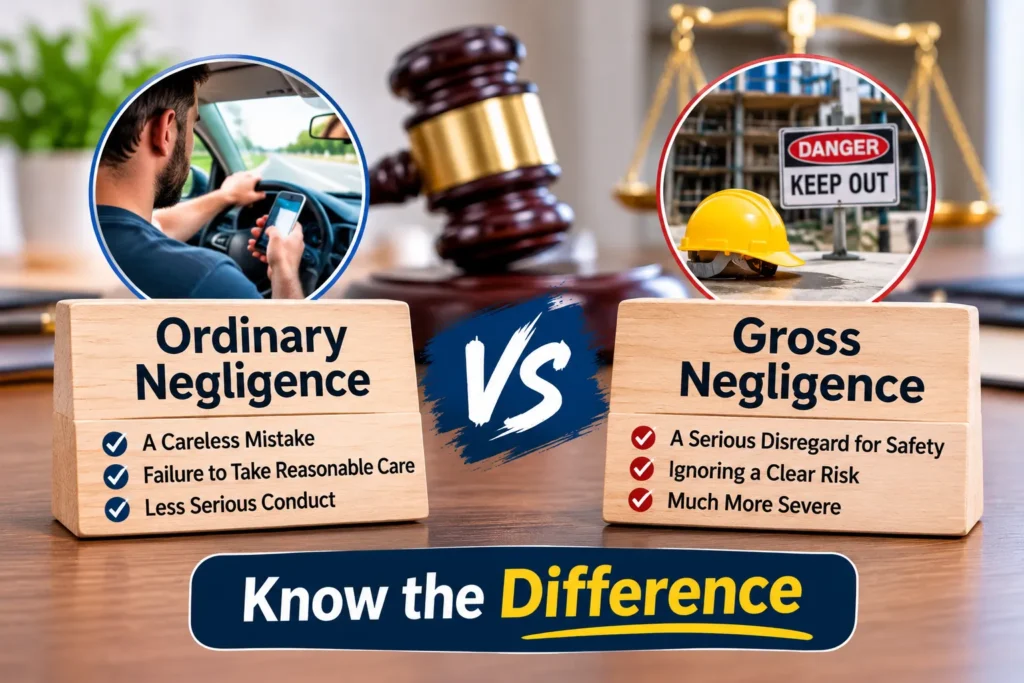
For example, imagine a driver checking their phone instead of watching the road. They don’t notice the car ahead stopping and cause an accident. This may be ordinary negligence.
To establish an ordinary negligence claim, you generally need to prove the four elements of negligence.
- Duty of care: The person had a responsibility to act safely.
- Breach of duty: They failed to meet that responsibility.
- Causation: Their actions caused the injury.
- Damages: Someone suffered a loss, such as medical bills or lost wages.
What Is Gross Negligence?
Gross negligence is more than a simple mistake. It is the failure to take proper care of a serious danger which might cause harm to others.
For instance, the owner of a factory is aware of a machine that is not fit for use, but does not correct the problem before letting workers operate it. If the person suffers an injury this could be gross negligence.
In other words, the individual was aware of the risk but didn’t take any action. The term may have different definitions in different states.
Ordinary vs Gross Negligence: Key Differences
The easiest way to understand the difference is to look at how serious the person’s actions were.
| Ordinary Negligence | Gross Negligence |
| A careless mistake | Extreme carelessness |
| Failure to take reasonable care | Ignoring a serious danger |
| Usually less serious conduct | Much more serious disregard for safety |
| Can lead to a negligence claim | May bring additional legal consequences |
Both can lead to legal responsibility, but gross negligence is generally treated more seriously.
Ordinary Negligence Examples
Ordinary negligence can happen in everyday situations. For example:
- A driver follows another car too closely and causes a crash.
- A store fails to clean a spill, and a customer slips.
- A property owner doesn’t repair a broken step, causing someone to fall.
- A healthcare provider makes an avoidable mistake during treatment.
- An employee leaves equipment in a walkway, creating a tripping hazard.
These situations may involve ordinary negligence when someone’s failure to take reasonable care causes an injury.
Gross Negligence Examples
Common gross negligence examples are when someone ignores a clear and serious risk. For example:
- A driver drives through an area where there is a risk of a crash and a high population density.
- An employer fails to follow a series of warnings for unsafe machinery.
- A building owner is aware of a balcony that is unsafe and permits the use of it.
- A business operates equipment which may cause injury to a person.
- A health care worker fails to acknowledge a medical emergency.
Absent a serious injury, it is not enough to establish gross negligence. The court also looks at what the person knew and how he/she acted.
Can You File a Gross Negligence Lawsuit?
Yes, you may be able to file a gross negligence lawsuit if someone’s extreme carelessness caused you harm. However, you’ll have to have proof to back your claims.
This may include:
- Doctors records and bills.
- Accident reports
- Photos or videos
- Witness statements
- Safety inspection records
- Messages showing someone knew about the danger
A lawyer will take a look at the evidence and inform you if you may have a case or not.
What Compensation Can You Receive?
If someone’s negligence caused your injury, you may be entitled to seek compensation for your injuries, including medical expenses, lost wages, future medical care, and pain and suffering.
Additionally, punitive damages might be recoverable in some gross negligence cases. These are designed to be a form of punishment for very serious misbehaviour and are not always given.
Why Does Duty of Care Matter?
The legal duty of care is not a concept that is new, it is a responsibility that people have to act safely and avoid putting others at risk.
For instance, drivers are responsible for adhering to traffic regulations, property owners are responsible for addressing known safety issues and healthcare workers are responsible for providing the right care.
If this responsibility is not fulfilled and a person is held responsible for the harm, they could be held liable.
Conclusion:
The differences between negligent and gross negligent is whether the careless act was more or less negligent. Ordinary negligence is a failure to take reasonable care and gross negligence is a failure to consider a significantly higher risk.
If you have been injured due to the actions of another, it may help to speak with an experienced attorney who can help you understand your rights and options.
Frequently Asked Questions
What is the main difference between ordinary and gross negligence?
Ordinary negligence is the failure to be careful. Gross negligence is the extreme carelessness or failure to take any notice of a serious danger.
Is gross negligence more serious?
Yes. This is a much more careless act than a regular careless error.
Can ordinary negligence lead to a lawsuit?
Yes. When the careless conduct of another causes you physical injury, you may have a claim for which you can seek compensation.
What are some examples of gross negligence?
It can be examples such as ignoring dangerous machinery, leaving a known safety hazard uncorrected, or permitting persons to enter an unsafe area with knowledge of that safety hazard.
Do you have to prove someone intended to cause harm?
No. You generally need to show how seriously the person ignored the risk, not that they wanted to hurt someone.
Can a company be held responsible for gross negligence?
Yes. A company may be found liable when it acts in a way that is an extreme lack of safety and ultimately causes harm.
What evidence helps prove gross negligence?
Your claim may be supported with photos, videos, witness statements, medical records, inspection reports, and messages from known dangers.
Can gross negligence lead to punitive damages?
Sometimes. Courts may award these damages to punish especially serious misconduct, depending on the applicable law.
Is gross negligence the same as recklessness?
Not exactly. While related, there may be definitions that differ from state to state or jurisdiction to jurisdiction.
How long do you have to file a negligence lawsuit?
It depends on where the incident happened and the type of claim. Speaking with an attorney early can help you avoid missing the deadline.