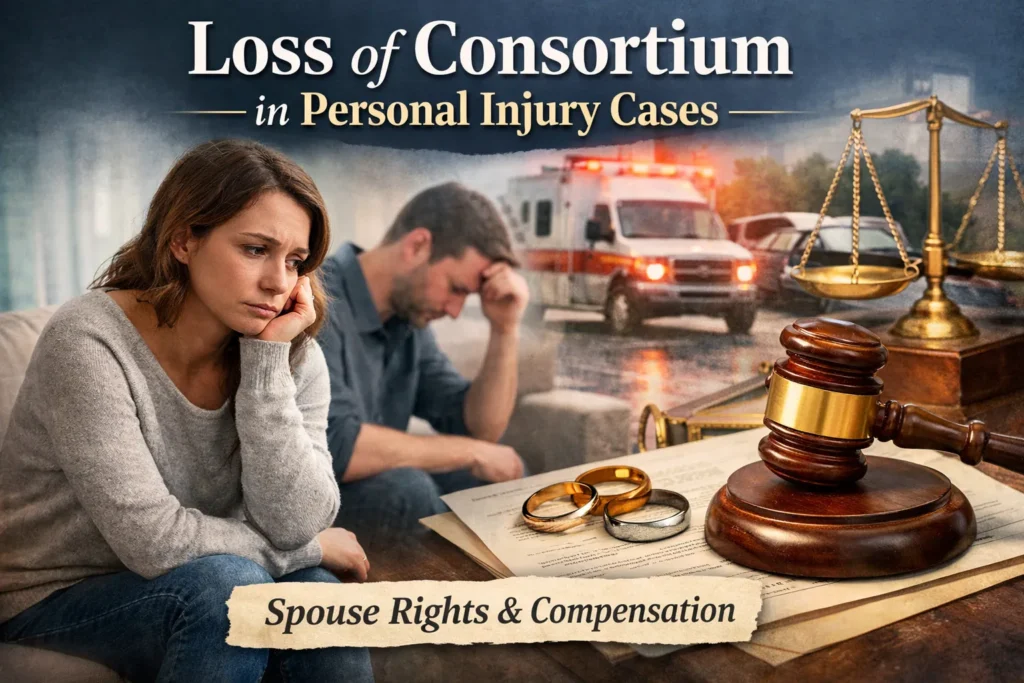
Loss of consortium is something that often comes up after a serious accident, but many people do not fully understand what it actually means until they are in that situation. It is not about medical bills or physical injuries. It is about what changes inside a relationship when one partner is hurt.
Think about everyday life between spouses. Conversations, shared routines, emotional support, physical closeness, and simply being there for each other. When an injury happens, all of that can shift. loss of consortium is the legal way of recognizing that change.
It is the gap created in a relationship after an injury. That gap may not be visible, but it is deeply felt.
Breaking Down the Loss of Consortium Meaning
Loss of consortium meaning becomes clearer when seen in real life situations. A spouse may still be present physically, but emotionally or functionally things are no longer the same.
That can look like:
- Less communication or emotional connection
- Loss of physical affection or intimacy
- One partner taking on all responsibilities alone
- A shift from partnership to caregiving
Loss of consortium focuses on these changes. A voice is given to what the non-injured spouse experiences every day.
The purpose is not to replace love or connection, but to acknowledge that something meaningful has been taken away due to another party’s negligence.
How a consortium claim fits into a personal injury case
A consortium claim does not stand alone. It is connected directly to the main personal injury case. When one partner files a claim for their injuries, the spouse can also file a loss of consortium claim as part of that case.
Here is how it usually works:
- The injured person proves negligence caused the injury
- The spouse shows how the relationship has been affected
- Both claims move together through the legal process
Loss of consortium depends on the success of the main case. If the injury claim fails, the consortium claim usually does too.
This is why both parts must be strong and clearly connected.
What is included in a loss of companionship lawsuit
A loss of companionship lawsuit is another way people refer to this type of claim. It highlights the emotional side of things rather than the legal wording.
In practical terms, it includes:
- Emotional distance that did not exist before
- Loss of shared experiences and activities
- Feeling of isolation within the relationship
- Loss of guidance, especially in long term partnerships
Loss of consortium captures all of this. It is not just one element. It is the full picture of how life as a couple has changed.
Understanding spouse rights in personal injury cases
Spouse rights in personal injury cases go beyond just being a supportive partner. The law recognizes that spouses are directly affected by serious injuries.
These rights allow a spouse to:
- Seek compensation for emotional loss
- Be heard in court about relationship impact
- Present evidence of lifestyle changes
- Claim damages separate from the injured partner
Loss of consortium is one of the strongest ways these rights are expressed. It ensures that the legal system does not ignore the emotional side of injury.
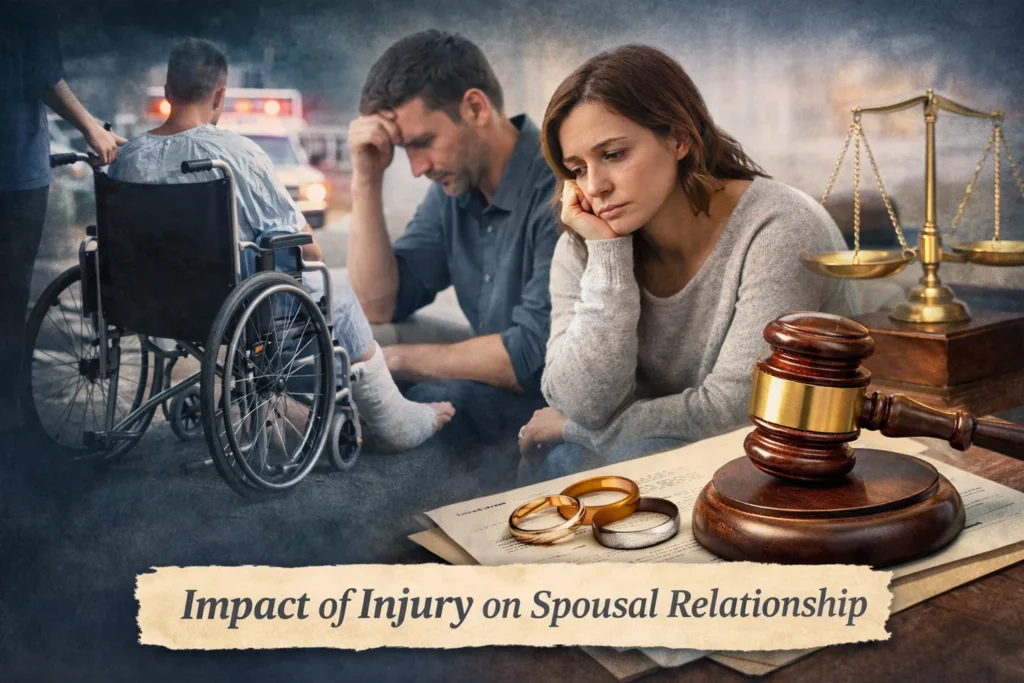
How Personal Injury Spouse Compensation is Decided
Personal injury spouse compensation under loss of consortium is not calculated like medical bills. There is no fixed number or formula.
Instead, courts look at:
- How strong the relationship was before the injury
- What exactly changed after the injury
- Whether the changes are temporary or permanent
- The emotional toll on the spouse
Here is a simple breakdown:
| Factor | What it means in real life |
| Severity of injury | More serious injury usually means greater impact |
| Duration | Long term or permanent changes increase value |
| Emotional impact | Deeper emotional loss leads to higher compensation |
| Lifestyle change | Major life adjustments strengthen the claim |
Loss of consortium is judged based on real human experience, not just documents.
How Loss of Consortium New Jersey Cases are Handled
Loss of consortium New Jersey follows the same general idea but with its own legal structure. It is treated as a derivative claim, meaning it depends on the main personal injury case.
In these cases, courts focus on:
- Whether there is a valid marriage
- The seriousness of the injury
- Clear evidence of relationship impact
Loss of consortium New Jersey cases often come from:
- Car accidents
- Workplace injuries
- Medical negligence
The approach is practical. Judges want to see how daily life has actually changed, not just general statements.
Real life impact of loss of consortium in personal injury cases
Loss of consortium in personal injury cases becomes clearer when looking at everyday examples.
A couple that once shared responsibilities equally may now have one partner doing everything. Conversations that used to be easy may now feel distant. Plans for the future may be uncertain or completely changed.
This is where loss of consortium matters most. The focus shifts to the emotional and relational damage that might otherwise go unnoticed.
Injury extends beyond the physical; identity, connection, and the way life is shared together are deeply affected.
Why this claim is often misunderstood
Many people think a loss of consortium claim is exaggerated or unnecessary. That usually comes from not understanding what it truly represents.
It is not about placing a value on love. It is about recognizing disruption.
Loss of consortium highlights:
- The silent struggles within relationships
- The emotional burden carried by spouses
- The long term effects of sudden life changes
Without it, personal injury claims would only tell half the story.
Conclusion:
A consortium claim completes the picture of what an injury really does to a family. It moves beyond hospital reports and focuses on human connection.
Loss of consortium ensures that the legal system sees both sides of the impact. The injured person and the spouse who lives through the consequences every day.
It brings balance to personal injury cases by acknowledging that relationships matter just as much as physical health.
Frequently Asked Questions
So, what’s this loss of consortium thing?
Picture this: your spouse gets injured, and bam—your marriage feels off. No more easy companionship, support flies out the window, intimacy? Gone. Daily connection? Shot. That’s loss of consortium in a nutshell.
How’s it not the same as a personal injury claim?
Injury claim’s all “Ouch, fix my body and bills.” This one’s “Hey, our relationship’s trashed now too.” It’s the spouse’s turn to talk.
Any spouse can claim loss of consortium, right?
Wrong. Injury’s gotta hit hard—really mess with your life together. Scrapes and bruises? No dice.
What proof do you need?
Spill your story. Get witnesses saying, “Yeah, I saw the change.” Medical papers, before-and-after life examples. Show the real shift.
Do courts buy emotional pain?
Totally. That’s what this claim’s for—no need for x-rays, just the relationship fallout.
How long’s the wait?
Tags along with the big injury case. Months? Years? Depends on the drama.
Can you claim loss of consortium if your spouse recovers?
Yep, if it shook things bad for a bit. But forever changes? Jackpot for bigger payouts.
Just about bedroom stuff?
Heck no. Emotional hugs, laughing together, splitting the load—that whole marriage magic fading.
What happens if the main case fails?
The consortium claim fails too. You must prove negligence caused the injury.
Why does loss of consortium matter?
Accidents affect more than one person. This claim recognizes the full impact on the marriage.