Personal injury discovery process is the part of a case where things start getting real. This is where both sides stop making general claims and begin laying everything out on the table. Documents, facts, timelines, statements, everything comes into focus here.
For someone going through a lawsuit, this stage often feels slow and a bit overwhelming. That is normal. The personal injury discovery process is detailed for a reason. It is designed to make sure nothing important is missed and no one is caught off guard later.
Think of it as the phase where the story behind the case is fully uncovered.
What Is a Discovery in a Lawsuit
A lot of people ask, what is a discovery in a lawsuit. It is simply the process where both sides exchange information about the case.
In discovery in legal terms, this means:
- Asking questions that must be answered truthfully
- Sharing documents related to the incident
- Taking formal statements under oath
The personal injury discovery process is not about winning yet. It is about understanding exactly what happened and what can be proven.
Why the Personal Injury Discovery Process Is So Important
The personal injury discovery process can shape the entire direction of a case. What gets uncovered here often decides whether a case settles or goes to trial.
Here is what this phase actually does:
- Shows how strong or weak a claim is
- Helps both sides understand the risks
- Brings clarity to confusing situations
- Pushes many cases toward settlement
Without the personal injury discovery process, cases would rely on incomplete information, which can lead to unfair results.
Steps in Discovery Process (Broken Down Simply)
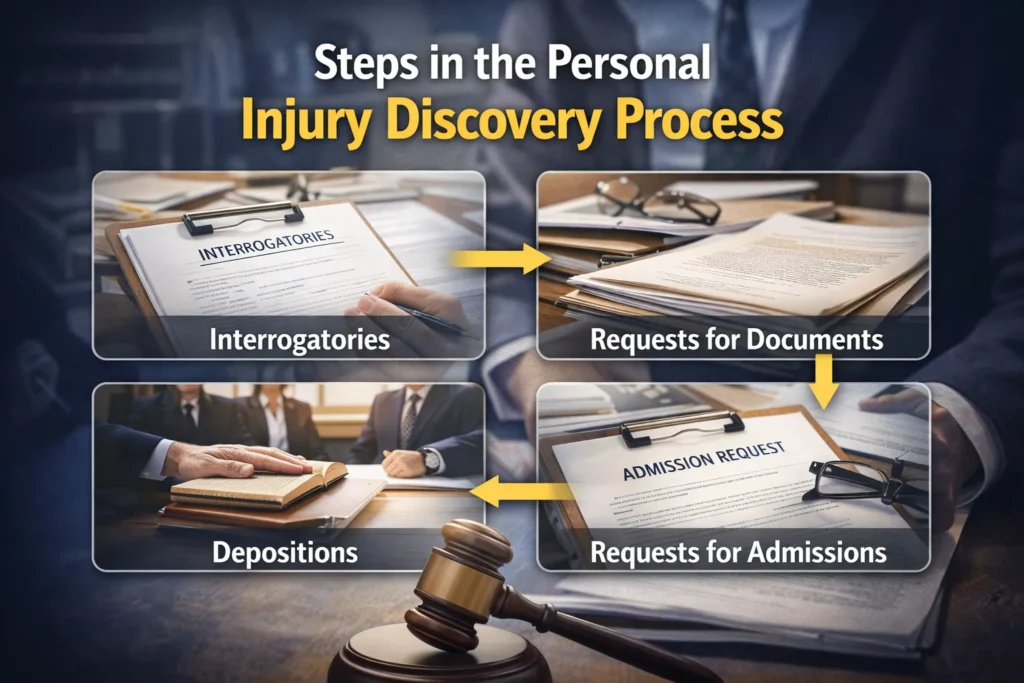
The steps in discovery process are structured, but they are easier to understand when broken into simple parts.
Interrogatories
These are written questions sent from one side to the other.
- Answers must be honest and under oath
- Questions focus on facts, injuries, and events
- Helps build a clear timeline
Requests for Documents
This is where paperwork comes in.
- Medical records
- Bills and expenses
- Insurance details
- Photos or reports
This step is a core part of the personal injury discovery process because documents often tell the most accurate story.
Depositions
This is where things get more personal.
- A person answers questions in front of attorneys
- Everything is recorded
- Answers are given under oath
Depositions are one of the most important parts of the personal injury discovery process because they show how someone explains their side of the story.
Requests for Admissions
These are statements the other side must agree or disagree with.
- Helps narrow down disagreements
- Saves time later in the case
Expert Review
Sometimes experts step in.
- Doctors explain injuries
- Specialists analyze how the accident happened
Each step adds another layer to the personal injury discovery process.
Stages of Personal Injury Lawsuit
To understand where discovery fits, it helps to look at the stages of personal injury lawsuit as a whole.
| Stage | What Happens |
| Case Filed | The lawsuit officially starts |
| Discovery | Evidence is exchanged |
| Negotiation | Settlement discussions begin |
| Trial | Case goes to court if needed |
The personal injury discovery process sits right in the middle and often decides what happens next.
How Long Does the Discovery Process Take
One of the biggest concerns is how long does the discovery process take.
There is no single answer, but here is a realistic idea:
- Smaller cases: a few months
- Medium cases: around 6 to 9 months
- Complex cases: a year or more
The personal injury discovery process takes time because:
- Information needs to be collected
- People need to respond
- Attorneys need to review everything carefully
It may feel slow, but every step has a purpose.
What Happens During Attorney Discovery
Attorney discovery is where legal strategy really comes into play.
During this time, attorneys:
- Go through every document in detail
- Prepare questions for depositions
- Look for gaps or inconsistencies
- Build arguments based on evidence
The personal injury discovery process is not just about collecting information. It is about understanding how that information will be used.
What Happens After Discovery
A very common question is what happens after discovery.
Once the personal injury discovery process is complete, things usually move faster.
Here is what typically follows:
- Settlement talks become more serious
- Mediation may be scheduled
- Attorneys prepare for trial if needed
In many cases, both sides now see the full picture, which makes settlement more likely.
What This Process Feels Like from the Inside
The personal injury discovery process is not just legal steps. It is also an experience.
Here is what most people notice during this phase:
A lot of questions
Some questions may feel repetitive, but they are meant to confirm details.
Requests for documents
There may be multiple requests for records and information.
Waiting periods
There are pauses while waiting for responses or documents.
Shifts in direction
New evidence can change how the case is handled.
The personal injury discovery process requires patience, but it also brings clarity.
Common Challenges During Discovery
Even though the discovery process is structured, it is not always smooth.
Delays
- Responses can take time
- Extensions are sometimes requested
Disagreements
- One side may challenge certain requests
- Some information may be withheld
Information overload
- Large amounts of data can feel overwhelming
Handling these issues properly keeps the discovery process moving forward.
Frequently Asked Questions
What is a discovery in a lawsuit?
A discovery in a lawsuit is a formal legal phase where each party gathers and shares relevant details such as records, answers, and testimony before trial begins.
How long does the discovery process take?
The discovery process can take several months to over a year depending on the case complexity, amount of evidence, and how quickly both sides respond.
What happens after discovery in a lawsuit?
After discovery, the case usually moves toward settlement discussions, mediation, or trial preparation depending on how strong the evidence is on each side.
What are interrogatories in discovery?
Interrogatories are written questions that one party sends to another, and the answers must be provided under oath with complete and accurate information.
Are depositions stressful?
Depositions can feel intense since questions are asked under oath, but proper preparation helps make the process smoother and more manageable.
Can cases settle during discovery?
Yes, many cases settle during the personal injury discovery process because both sides begin to understand the strengths and risks of their position.
What if someone does not respond to discovery requests?
If a party fails to respond, the court can step in and require compliance, sometimes with penalties for not following the rules.
Do clients need to participate in discovery?
Clients are often involved by answering questions, providing documents, and attending depositions to help build a complete and accurate case.
Why is legal help important in discovery?
Legal help ensures the process is handled correctly, deadlines are met, and all evidence is used effectively to support the claim and protect rights.