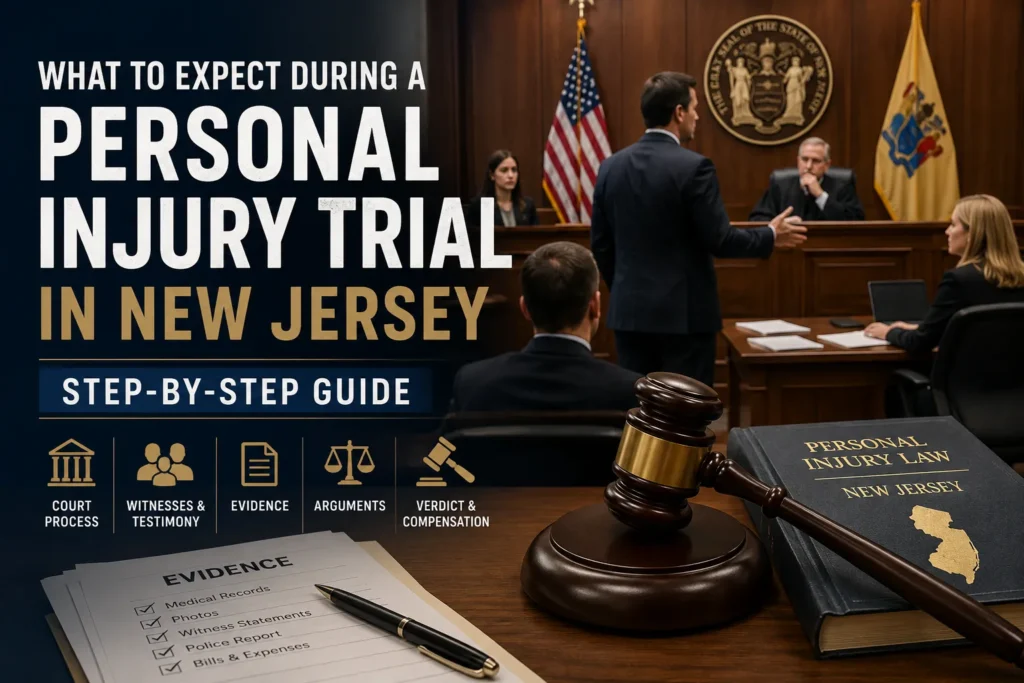
A personal injury trial is what happens when a case does not settle and both sides end up in court. In New Jersey, it simply means everything gets decided in front of a judge or jury based on proof, not opinions.
An experienced attorney for injury cases may sound heavy, but in reality it follows a clear, step-by-step flow. Once that flow is understood, the whole process becomes much easier to follow and know what happens during a personal injury trial.
What a Personal Injury Trial Actually Means
It is just a structured personal injury court process where both sides finally put everything on the table.
In simple terms, it goes like this:
One side says what happened, the other side responds, and the court decides what is actually true.
The court focuses on:
- What really happened in the accident
- Who caused it
- How serious the injury is
- What fair compensation should be
So a personal injury trial is not about guessing, it is about proving.
How a Case Even Reaches Trial
No one directly jumps into a personal injury trial. It slowly builds up over time.
It usually reaches trial when:
- Both sides cannot agree on who is at fault
- Insurance company refuses a fair payout
- Settlement talks go in circles and fail
Most cases actually end before this stage, but when neither side backs down, trial becomes the final step.
Before Trial: The Pretrial Hearing
Before the personal injury trial starts, there is a pretrial hearing and if you are wondering what is a pretrial hearing in a personal injury case?
Think of it like final sorting before the real court process begins.
At this point:
- All evidence is checked
- Witness list is finalized
- Trial date is locked
- Judge still tries to push a settlement
Sometimes, this is where cases quietly end before trial even starts.
Inside the Personal Injury Trial (Step-by-Step Flow)
Once the personal injury trial begins, everything follows a very clear order and has top tips for preparing for a personal injury trial.
1. Opening statements
Both sides start by simply telling their story.
No proof yet, just a clear version of what each side claims happened.
2. Evidence is shown
Now the real support comes in:
- Medical reports
- Accident photos
- Police records
- Bills and documents
This is where the story starts getting tested with facts.
3. Witnesses speak
People who saw the accident or know about it come forward and explain what they know.
They speak under oath, so truth is very important here.
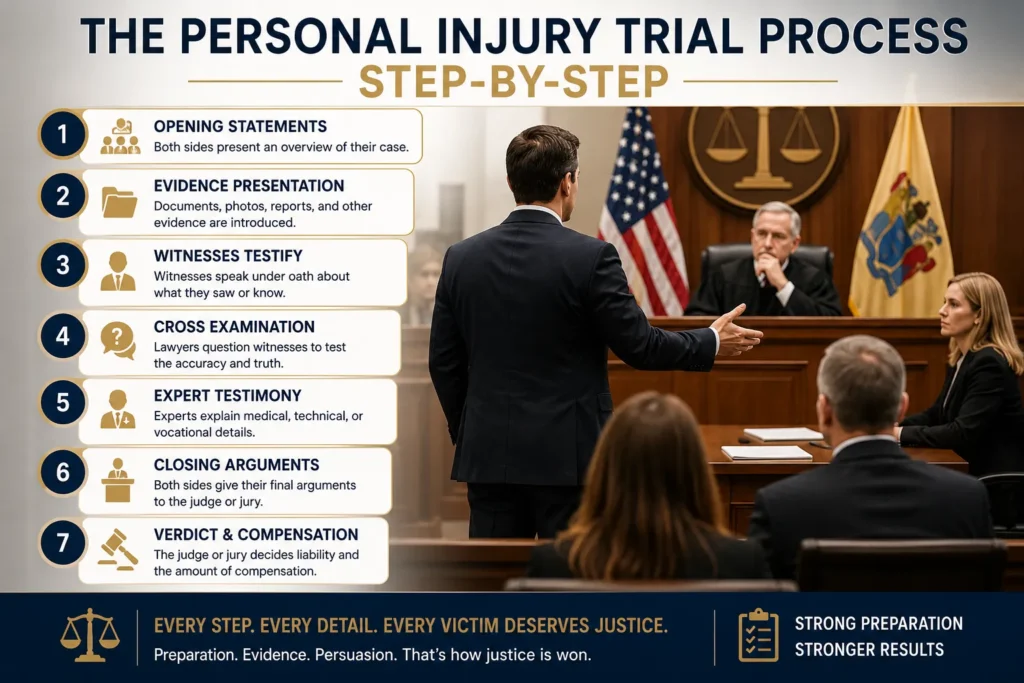
4. Lawyers Question Everything
Both sides start asking questions.
Not to confuse, but to check if the story is solid or weak.
5. Experts explain details
Doctors or specialists step in and break things down:
- How serious the injury is
- How it likely happened
- What recovery looks like
This helps the court understand the injury clearly in a personal injury trial.
6. Final arguments
Both sides give their last explanation.
Basically a final attempt to convince the court.
7. Final decision
Judge or jury makes the call:
- Who is responsible
- How much compensation should be paid
That is the end of the personal injury trial.
How Long the Whole Process Takes
A personal injury trial is not just court days. Most of the time is before court.
Simple view:
- Case building: several months
- Pretrial stage: 1–3 months
- Trial itself: a few days to weeks
- Verdict: usually quick
So the waiting is long, but the courtroom part is usually short.
How Preparation Changes Everything
A personal injury trial really depends on how well everything is prepared.
Strong preparation usually means:
- Medical reports are organized
- Bills and expenses are saved
- Accident photos are collected
- Witnesses are ready
- Personal injury trial timeline is clear
When everything is in order, the case becomes easier to understand and stronger in court.
Why a Lawyer Matters So Much
A personal injury trial is not just about what happened, but how clearly it is explained.
A good injury lawyer helps by:
- Putting the story in simple order
- Handling court rules
- Questioning witnesses properly
- Pointing out weak arguments from the other side
- Presenting evidence in a clear way
In many cases, how the story is told matters just as much as the facts themselves.
Quick Simple View of the Whole Process
A personal injury trial usually looks like this:
- Accident happens
- Claim is filed
- Evidence is collected
- Settlement is tried
- Pretrial hearing happens
- Trial begins
- Final decision is given
Simple steps, but each one builds toward the final outcome.
Frequently Asked Questions
What actually happens in a personal injury trial?
Both sides walk into court with everything they’ve got. Evidence, witnesses, arguments — all of it gets put on the table. Then a judge or a jury listens, looks at the facts, and decides what really happened and who’s responsible.
How long does a personal injury trial usually take?
The trial itself? That’s usually a few days, maybe a few weeks in court. But listen — the real time isn’t the trial. It’s everything that comes before. Getting your evidence together, collecting records, showing up for hearings. That part can take months. So don’t think it happens overnight. It’s a long road, but you get there.
Why do personal injury cases go to trial instead of settling?
Cases go to trial when both sides cannot agree on fault or compensation. If settlement talks fail completely, the court becomes the final place to decide the outcome fairly.
What kind of proof is used in court?
Stuff like medical records, photos from the accident, police reports, statements from witnesses, and opinions from experts. That’s the proof. And it helps the court see what really went down in a personal injury trial.
Can a case still settle during trial?
Yeah, absolutely. Even after the trial has started, both sides can still look at each other and say, “Alright, let’s make a deal.” And if that happens? The trial stops right then and there. Done. No final verdict from the judge or jury. The case just ends, right there on the spot.
Why are witnesses important?
Witnesses help explain what they saw or know about the accident. Their statements can support or challenge each side’s version of events in a personal injury trial.
Do most cases actually go to trial?
No, most cases do not go to trial. They usually settle earlier during negotiation or pretrial stages because trial takes more time and carries more risk.
Why is preparation so important?
Preparation is important because strong documents and clear evidence make the case easier to follow and more convincing during a personal injury trial.
What happens after the verdict?
Once the verdict comes in, the court figures out how much money is owed — that’s the compensation. But here’s the thing. If one side isn’t happy with how it went down, they might appeal. That means they ask a higher court to take another look. Depends on their legal options, though. Not everybody gets to do it.
Why is a lawyer important in trial?
Look, a lawyer does more than just show up. They explain your side so people actually get it. They handle all the courtroom steps, the paperwork, the rules, the timing. And they argue for you in a way that’s strong and makes sense. That kind of support can really change the outcome of a personal injury trial. Big time.