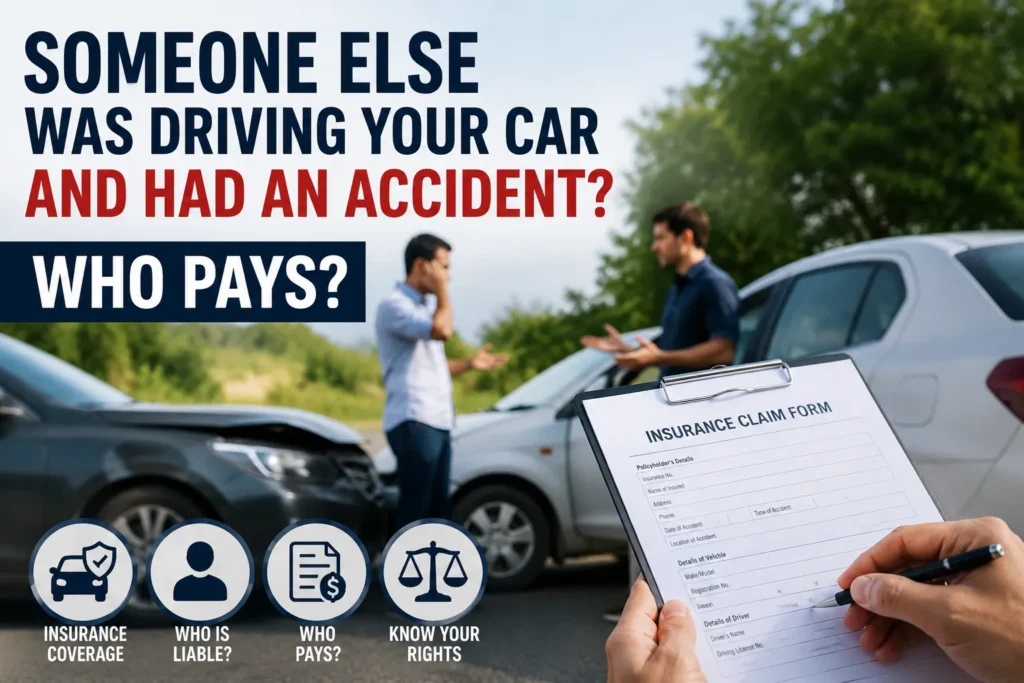
Someone else driving my car and getting into an accident can quickly create confusion about who is responsible for the injuries, vehicle damage, and other losses.
The answer usually depends on who was driving, whether you gave permission, who caused the accident, and what insurance coverage applies. In some cases, your insurance policy may provide primary coverage, while the driver’s insurance may provide additional coverage.
This article explains what happens when someone else is driving your car and gets into an accident, who may be responsible, and what you should do afterward.
Someone Else Was Driving My Car: Who Is Responsible?
When someone else is driving my car and causes an accident , responsibility generally depends on who caused the crash and the circumstances surrounding it.
If the person you permitted to drive your car was negligent, such as by speeding, running a red light, or failing to pay attention, they could be liable for the crash.
Insurance liability is more complex than simply blaming a driver. In many cases, the insurance policy of the owner of the vehicle might provide coverage since insurance policies typically follow the vehicle.
The exact outcome depends upon the policies, the state law, the permission to operate the vehicle, and the circumstances of the collision.
What Happens If Someone Else Crashes Your Car?
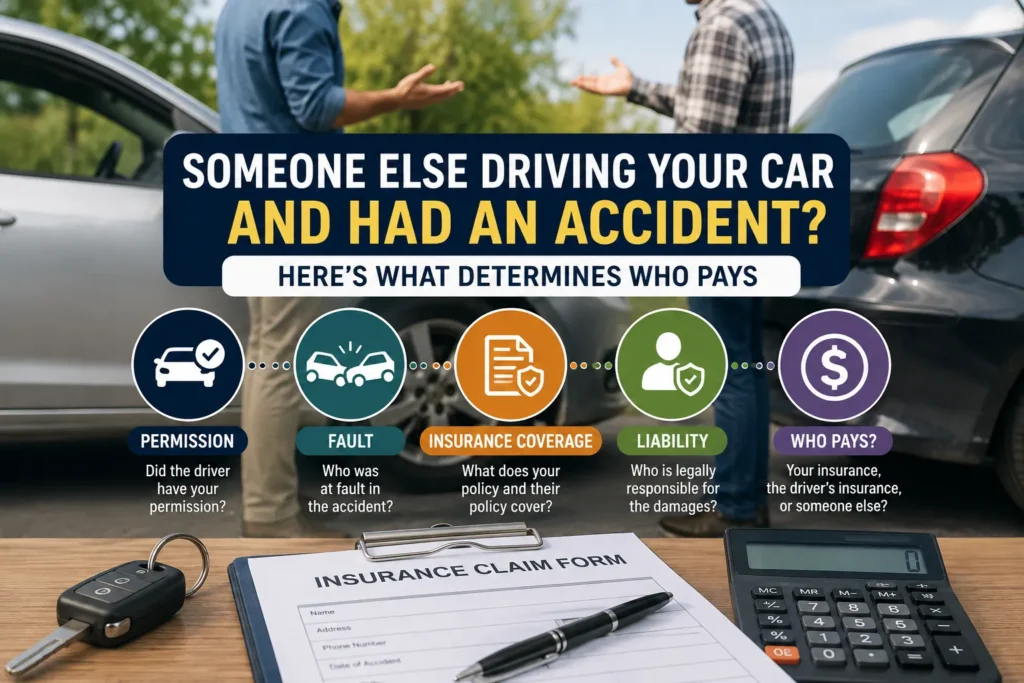
If someone else crashes your car, several factors can affect who pays for the resulting damage or injuries. These may include whether you gave the driver permission to use your vehicle.
Key factors include:
- Whether the driver had your permission
- Who was responsible for the accident
- Whether the driver has their own auto insurance
- What coverage is available under your policy
- Whether anyone was injured
- Whether any insurance exclusions apply
Does Car Insurance Cover Someone Else Driving?
Car insurance may cover someone else driving your car if the driver had permission to use the vehicle, but coverage is not automatic in every situation.
Insurance policies include terms, conditions, exclusions, and coverage limits that could affect the final outcome.
If the driver frequently uses your vehicle but isn’t covered by your insurance, does not have authorization, or falls within an exclusion from your policy, the insurer could handle the claim in a different way.
That’s why you should check your policy instead of thinking that all drivers are protected.
- Are You Liable If Someone Else Crashes Your Car?
In the event that another driver was at fault for the crash, their liability insurance may help pay for covered damage to your vehicle. If your driver was the one to cause the accident, the policy could cover claims that involve the other driver, based on the situation and the applicable coverage.
- If Someone Crashes Your Car, Who Is Liable?
To determine who is liable after someone crashes your car, start by identifying who caused the collision. The driver who acted negligently may be responsible for the resulting damages, although the vehicle owner’s insurance could also become involved if the driver had permission to use the car.
What To Do After Someone Wrecks Your Car
If someone drives your car and crashes, follow these steps:
- Make sure everyone is safe: Contact emergency services in the event of injury or if the location is dangerous.
- Document the accident: Collect photographs, contact information, insurance details, as well as information on witnesses if feasible.
- Get the police report: This can provide vital information about the crash.
- Inform your insurance company: Report the accident immediately and provide accurate information about who was driving.
- Check coverage available: Determine whether your policy, the driver’s policy, or the insurance policy of the other driver may apply to the claim.
- Don’t admit fault: Let the insurers and the appropriate professionals look into responsibility.
If someone drives your car and crashes, you should take several steps after a car accident to protect your rights and document what happened.
Conclusion
Someone else driving my car does not automatically mean that the vehicle owner is personally responsible for every expense after an accident. Liability generally depends on who caused the crash, whether the driver had permission to use the vehicle, and what insurance coverage applies.
Your auto insurance may cover certain claims, while the driver’s insurance or another at-fault driver’s insurance may also apply.
Because insurance rules and liability laws vary by state, serious injuries or significant property damage may require advice from an insurance professional or attorney before accepting a settlement.
Frequently Asked Questions
Who pays if someone crashes your car?
Usually, the insurance policy is able to respond according to the specific circumstances and policy conditions. The driver who caused the accident may also be personally liable for certain damages.
Can someone else’s insurance pay for my damaged car?
If that person was the one who caused the accident, their liability insurance may pay for covered damage to your vehicle, subject to policy limits and applicable rules.
What if my friend crashes my car with permission?
If your friend had permission to drive your car, your insurance may provide coverage depending on the policy and circumstances. The driver’s insurance could also be relevant.
What if someone drives my car without permission?
Unauthorized use may alter the analysis of liability and insurance dramatically. Inform your insurance company and provide exact details on what the car was used for.
If someone drives your car and crashes, are you liable?
Not necessarily. Simply owning the vehicle does not automatically make you personally responsible for an accident caused by another driver.
Does car insurance follow the driver or the car?
In a lot of situations, the car’s insurance coverage is the first point of reference for anyone who drives with permission. Specific rules differ based on policy and location.
What if the driver has no insurance?
Your insurance may provide security in certain situations, in particular if you carry relevant coverage. The financial responsibility of the driver could also be a consideration.
Can I be responsible for a passenger’s injuries?
The possibility of this is contingent on circumstances; the insurance coverage may be affected, as will negligence and local law. Claims for injuries must be reported to the insurance company immediately.
Should I report an accident if the damage looks minor?
Generally, logging the incident will assist you in the event that you later make a claim. Make sure you follow the insurance policy’s reporting guidelines.
What should I do after someone crashes my car?
First, make sure everyone is safe. Then document the accident, exchange information, obtain a police report when appropriate, and notify your insurance provider promptly.