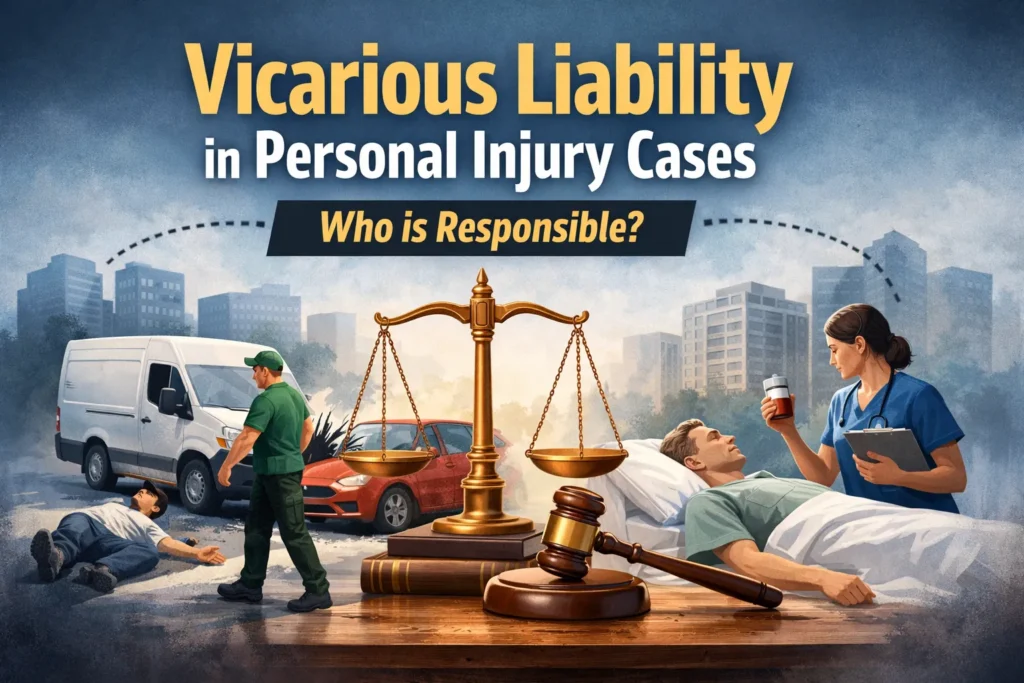
Vicarious liability sounds all lawyer-y, but let us break it down super simple: it’s when one person has to answer for what someone else does. This pops up a ton with bosses and their workers. Say an employee messes up badly while on the clock and somebody gets hurt—the employer might end up footing the bill.
Take a delivery driver, for instance. They’re out there hustling, dropping off packages, and oops—they accidentally rear-end another car. The driver’s at fault, but the company could get dragged in too because it was work-related.
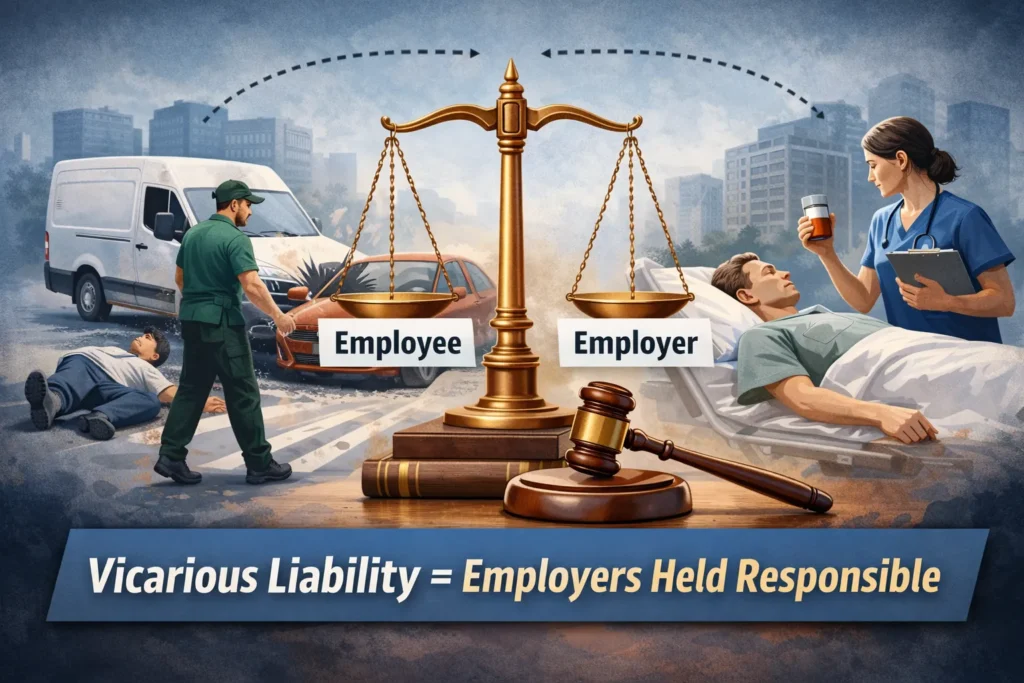
That driver is obviously responsible, but so could be the delivery company. That’s vicarious liability in personal injury cases. It’s the law’s way of saying, “If you put someone in a position of responsibility, you share the risk.”
How Vicarious Liability Actually Works
There’s a fancy term behind this called respondeat superior, which basically translates to “let the master answer.” It just means employers can get held accountable for what their employees do—but only if it’s related to the job.
Here’s the key: it doesn’t cover everything employees do. If an employee is doing something personal or outside work and causes harm, the employer usually isn’t responsible. But if it happens on the job? That’s where vicarious liability law comes in.
Some Simple Rules
- The person causing the injury must be an employee or agent.
- The act must happen during working hours and as part of their job.
- The employer usually isn’t responsible for intentional or criminal acts outside work.
| Rule | What It Means | Example |
| Employment status | Must be an employee/agent | Nurse in hospital |
| Scope of employment | Must be work-related | Truck driver delivering packages |
| Employer connection | Employer benefits from the act | Taxi driver transporting passengers |
Real-Life Examples of Vicarious Liability
Sometimes, seeing examples makes it click:
- A delivery driver hits a pedestrian while making a delivery → the company may be on the hook.
- A hospital nurse gives the wrong medication → the hospital can face vicarious liability.
- A restaurant driver crashes the car while delivering food → restaurant could be liable.
Basically, if someone is acting on behalf of a company or employer, and it’s part of their job, the law can make that company responsible.
Where do you see vicarious liability in everyday life?
Let me tell you about a few common spots.
Car and truck accidents
Picture this: a company driver crashes while delivering packages, or a rideshare driver hits a pedestrian during a fare. Since they’re on the job, the company can get held responsible for medical bills, lost wages, and all that. That’s why vicarious liability pops up a lot in these traffic injury claims.
Slip and fall from employee slip-ups
Not every wet floor slip counts, but say an employee mops and skips the warning sign—bam, customer falls. The store’s on the hook through vicarious liability because it was their worker doing the job.
Medical mix-ups
In hospitals, if a doctor botches surgery or a nurse gives the wrong meds, you can sue both them and the place. The hospital often pays up under vicarious liability and that respondeat superior rule.
Vicarious Negligence and Tort Liability
You might also hear “tort vicarious liability.” That just means a civil wrong (a tort) where someone else is responsible. In simple terms: the law wants the injured person to get compensated, and sometimes the employee doesn’t have the money to pay. So the employer steps in.
- Common cases: car accidents, slips and falls at work, medical errors.
What Employers Need to Know
Employers have to be careful. Employer liability for employee negligence doesn’t just happen magically—it’s triggered by certain conditions:
- Negligent hiring or failing to train employees properly.
- Ignoring safety rules or protocols.
- Using employees for tasks that involve risk without supervision.
But employers are usually not responsible for:
- Acts outside work hours.
- Personal acts unrelated to the job.
- Criminal acts with no benefit to the employer.
How You Prove Vicarious Liability
If someone is hurt and wants to claim vicarious liability, here’s the usual way it works:
- Show the person who caused the injury was an employee or agent.
- Prove the act happened during work duties.
- Show the act caused harm.
- Claim compensation from the employer.
It sounds simple, but lawyers dig into every little detail. Every act, every time, matters.
Vicarious Liability vs Direct Liability
| Type | Who Pays | Example |
| Vicarious Liability | Employer | Company driver hits pedestrian while delivering |
| Direct Liability | Person who caused harm | Employee crashes car on personal errand |
| Shared Liability | Both | Employee messes up on the job + employer failed to train properly |
Why Vicarious Liability Matters
- It ensures injured people get compensated.
- It pushes employers to train and supervise employees well.
- It highlights the importance of insurance coverage.
Without it, victims might have no one to turn to if an employee makes a mistake.
Frequently Asked Questions
What is vicarious liability in simple words?
Okay, real talk: vicarious liability is when the employer has to own up legally for their employee’s screw-up, like if the worker injures someone right in the middle of doing their job.
How does vicarious liability work in personal injury cases?
Here’s how it goes down—if your employee hurts somebody bad while on work time, you as boss might get stuck paying the damages to help the victim out.
Are employers liable for the intentional acts of their employees?
Nope, employers usually aren’t. If the worker does something mean-spirited on purpose or way off their job track, the boss isn’t touching that liability.
What is the respondeat superior doctrine?
Respondeat superior is that classic rule where it says to employers, “Your employee’s actions on the job? Yeah, that’s on you to handle.”
Can independent contractors fall under vicarious liability?
Not so much, to be honest. This hits employees square on, but certain contracts could loop in contractors if the setup fits.
What are some common examples of vicarious liability?
Everyday ones: delivery driver rear-ends someone on their shift, nurse slips up with a patient, or staffer wrecks the work truck out on errands.
When are employers not liable for an employee’s negligence?
Employers get off the hook if the mistake’s after work, totally unrelated to duties, or some shady criminal act that doesn’t do the company any good.
How is tort vicarious liability different from regular negligence?
With plain negligence, the guilty party pays their own tab. Vicarious liability in torts shifts it to the employer, so victims don’t get left hanging without cash.
Does insurance usually cover vicarious liability claims?
Totally, yeah. Businesses grab insurance just for this—to cover when workers mess up during hours.
How often does vicarious liability get applied in practice?
It happens a ton, seriously—anytime an employee causes harm on the job, and it’s popping up in cases left and right.