
Witness testimony is usually the part of a personal injury trial where everything starts to feel real, because it is people actually speaking about what they saw, what they remember, and what happened in those moments when the accident took place. Instead of only relying on papers, reports, or technical records, the court hears a version of the event.
Most of the time, testimony is what helps make sense of a confusing situation. It slowly turns scattered details into a clear story of how the accident happened and who was involved.
How witness testimony actually comes into play
Witness testimony is given by people who were present at the scene or have direct knowledge of what happened. It can come in different forms depending on the stage of the case.
Sometimes it starts as a simple witness statement right after the accident. Later, it may turn into deposition testimony before trial, and finally, it becomes court testimony when spoken in front of a judge.
It usually comes from:
- People who directly saw the accident happen
- Anyone who was nearby and noticed key details
- Individuals who can help confirm or explain what took place
Eyewitness testimony is often the most important because it comes from someone who actually saw the event unfold in real time.
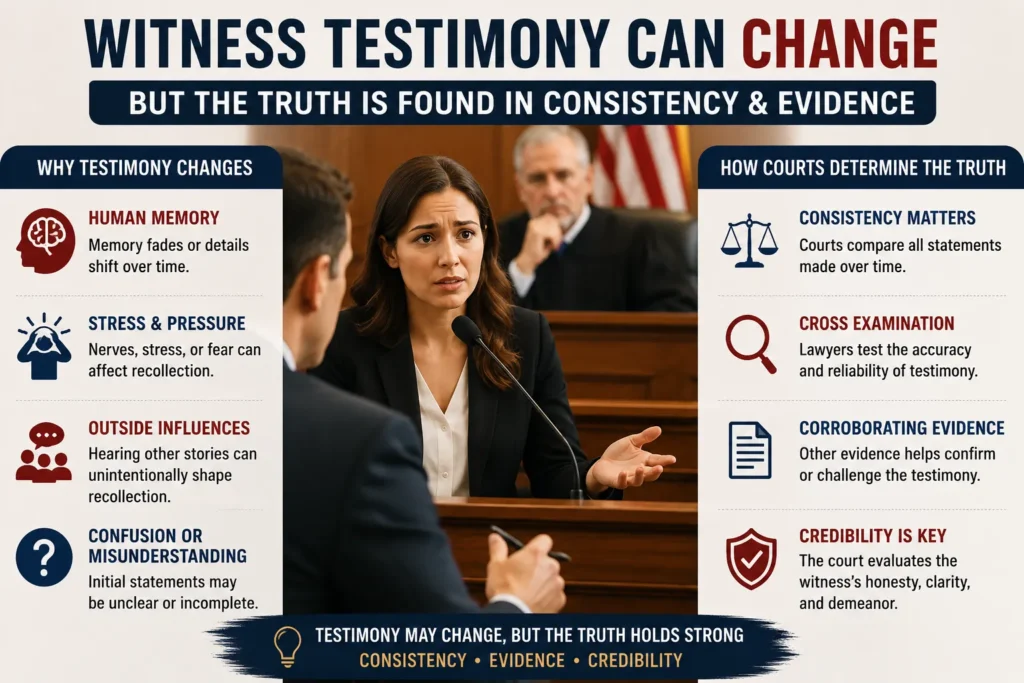
Why testimony does not always stay exactly the same
One important thing to understand is that witness testimony can change slightly over time. That does not always mean something is wrong. It often happens because memory is not like a video recording.
Here’s what can influence it:
- Stress during cross examination in court
- Time passing between the accident and trial
- Hearing other versions of the same incident
- Confusion during early questioning or witness statement writing
So the first version of testimony and the final court testimony may sound a little different, even if the person is being honest.
Why witness credibility becomes the turning point
Witness credibility is basically how much trust the court places in the person speaking. Even strong witness testimony can lose impact if the witness seems unsure or inconsistent.
Courts usually pay close attention to:
- Whether the story stays consistent over time
- How the witness responds under questioning
- How clear, simple, and detailed the answers are
- Whether there is any bias or personal connection
When credibility is strong, witness becomes much more powerful in shaping the case.
What Deposition Testimony Really Means
Deposition testimony happens before the trial. It is where the witness answers questions under oath, and everything is recorded carefully for later use.
This step is important because it locks in the early version of testimony while details are still fresh.
It helps to:
- Capture early facts before memory fades
- Prepare both sides for trial questioning
- Compare early and later statements
- Build legal strategy based on consistency
Cross examination and how it tests everything
Cross examination is the stage where the opposing lawyer questions the witness very closely. This is where testimony is tested in detail.
The goal is to:
- Check if the story stays consistent
- Point out small contradictions
- Test how well the witness remembers details
- Challenge false witness testimony if it appears
This part can feel intense because every answer is carefully examined.
Court testimony and how the final story is built
Court testimony is the final version of witness given in front of a judge or jury. It is spoken under oath and becomes part of the official legal record.
At this stage, everything is looked at together:
- Earlier witness statements
- Deposition testimony
- Personal injury evidence
- Medical records, photos, and reports
This is where the court starts putting the full story together and deciding what feels most accurate.
Different Forms Witness Testimony can Take
Throughout a case, testimony appears in different forms, and each one adds a piece to the puzzle:
- Witness statement: the first written version after the accident
- Deposition testimony: sworn answers before trial
- Trial witness: person speaking in court
- Accident witness statement: immediate description from the scene
Each version helps build a clearer picture of what actually happened.
How Personal Injury Evidence Connects Everything
Personal injury evidence is the full set of proof used in the case, and witness testimony plays a big role in supporting it.
It usually works alongside:
- Medical reports and injury details
- Photos or videos from the accident scene
- Police or official reports
- Expert opinions and analysis
When testimony matches this evidence, the case becomes much stronger and easier to understand.
Why Accuracy is so Important
If testimony is wrong or turns into false witness testimony, it can seriously affect the outcome of the case. Courts rely heavily on honesty and consistency.
Even small differences between statements can raise questions, which is why every version from the first witness statement to the final court testimony matters.
Conclusion:
Witness testimony is what brings a personal injury case to life in court. It turns events into a story that the court can follow and understand. When it stays clear, consistent, and believable, it becomes one of the strongest parts of the entire trial.
Frequently Asked Questions
What is witness testimony?
Witness testimony is when a person explains what they saw or know about an accident so the court can understand what actually happened.
Why is testimony important?
Because it gives a real human account of the accident and helps support or challenge personal injury evidence in court.
Can witnesses change during a case?
Yes, it can change slightly due to stress, time passing, or different questioning during the legal process.
What is eyewitness testimony?
Eyewitness testimony comes from someone who directly saw the accident happen and describes it from personal experience.
What is deposition testimony used for?
Deposition testimony records early sworn answers before trial so lawyers can compare them later in court.
What happens during cross examination?
Cross examination is when the opposing lawyer questions the witness to test accuracy, memory, and consistency.
What is court testimony?
Court testimony is the official spoken statement given under oath during trial in front of a judge or jury.
What is a witness statement?
A witness statement is the first written version of what someone saw or experienced after the accident.
What does witness credibility mean?
Witness credibility means how trustworthy and reliable the court finds a witness based on consistency and behavior.
What is false witness testimony?
A false witness is when incorrect or misleading information is given, which can affect fairness and outcome of a case.