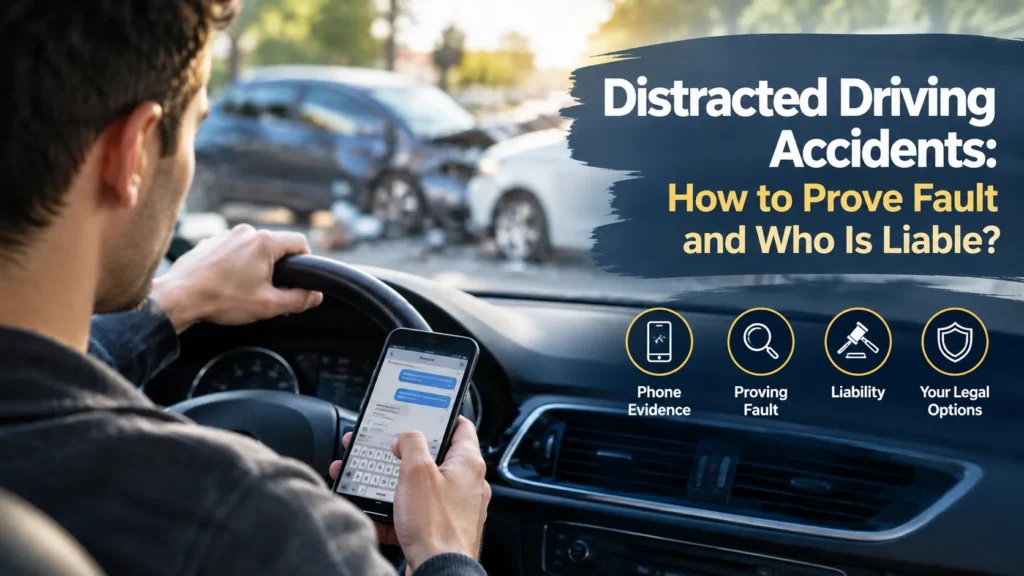
A distracted driving accident can happen in seconds when a driver looks at a phone, adjusts a navigation system, or takes their attention away from the road. These crashes can cause serious injuries, vehicle damage, and unexpected expenses. Understanding how fault is established can help injured victims protect their rights and pursue compensation.
Proving liability often requires evidence showing what the driver was doing, how their actions contributed to the crash, and whether another party may share responsibility.
What is a Distracted Driving Accident?
A distracted driving accident occurs when a driver loses focus on driving because of an activity that takes their eyes, hands, or mind away from the road. Even a brief distraction can prevent someone from noticing traffic signals, pedestrians, or a vehicle braking ahead.
A driver may be considered negligent if they fail to exercise reasonable care and that failure causes a collision. However, liability depends on the evidence and the laws that apply to the incident.
Types of Distracted Driving
Understanding the types of distracted driving can help explain how a crash occurred.
Visual distraction happens when drivers take their eyes off the road, such as when reading a message. Manual distraction occurs when they remove their hands from the steering wheel to hold a phone or reach for an object. Cognitive distraction involves taking their attention away from driving, such as becoming absorbed in a conversation.
Some activities involve multiple distractions at once. Texting, for example, can require drivers to look away, use their hands, and focus mentally on a message.
Common Causes of Distracted Driving Accidents
Texting and Driving
A texting and driving accident can occur when a driver reads or sends a message instead of watching the road. Even a short glance at a phone can reduce the time available to react to sudden hazards.
Phone-related evidence, witness accounts, and crash-scene details may help establish whether texting contributed to the collision.
Cell Phone Use While Driving
Cell phone use while driving can involve texting, browsing, making calls, or interacting with applications. Laws vary by state and may restrict handheld devices, texting, or other phone activities.
Using a hands-free device does not automatically mean a driver was paying adequate attention. Investigators may consider the circumstances of the crash and other evidence when determining whether phone use contributed to the collision.
Other Driving Distractions
Eating, adjusting music, programming a navigation system, reaching for objects, or interacting with passengers can also distract drivers. These actions may become dangerous when traffic is heavy or road conditions require close attention.
How to Prove Distracted Driving
If you want to understand how to prove distracted driving, focus on collecting evidence that connects the driver’s distraction to the collision. An accusation alone is not enough; evidence must support the claim under the applicable legal standard.
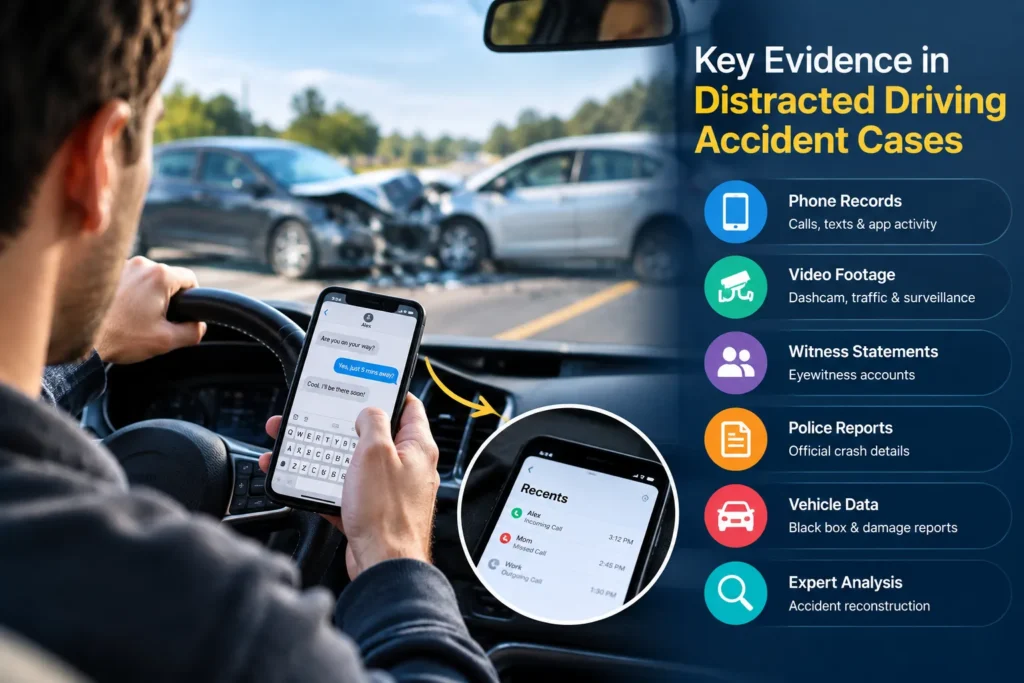
Important evidence may include police reports, eyewitness statements, photographs, traffic-camera footage, and dashcam recordings. Phone records may also help establish activity around the time of the crash, although obtaining them may require appropriate legal procedures.
Vehicle data, nearby surveillance footage, and expert crash analysis may provide additional information. Preserve relevant evidence promptly because recordings can be deleted and physical evidence can disappear.
Driver Negligence in a Car Accident
Driver negligence in a car accident generally involves failing to use reasonable care under the circumstances. A negligence attorney can help evaluate the evidence and determine whether the facts support a negligence claim. For example, a driver who looks down at a phone, misses a traffic signal, and hits another vehicle may have acted negligently.
To establish a negligence claim, an injured person generally needs to show that the driver owed a duty of care, breached that duty, caused the accident, and resulting harm occurred. The precise legal requirements and burden of proof depend on the jurisdiction.
Who Is Liable for a Distracted Driving Accident?
The distracted driver may be liable if their negligence caused the crash. Depending on the circumstances, another driver may also share fault if their actions contributed to the collision. If more than one driver contributed to the collision, comparative negligence in car accident claims may affect how fault is allocated and whether an injured person can recover compensation
In certain cases, an employer could be responsible when an employee causes a crash while performing job duties. Other parties may be involved in unusual circumstances, but liability depends on the facts and applicable law.
An insurance company will typically investigate the claim and evaluate the available evidence. Its decision does not necessarily determine the final legal outcome if the parties dispute responsibility.
When to Contact a Distracted Driving Accident Attorney
An automobile accident attorney may help investigate the crash, gather evidence, communicate with insurers, and assess potential compensation. Legal guidance can be especially useful when injuries are serious, fault is disputed, or phone records and video footage may be important.
An attorney can also explain applicable deadlines and comparative-fault rules. If you are considering legal action, preserve documents related to medical treatment, repair costs, lost income, and communications with insurers.
Conclusion
A distracted driving accident can lead to complicated questions about fault, evidence, and compensation. Police reports, witness accounts, video recordings, and other relevant records can help establish whether distraction contributed to a crash.
If you have been injured, prioritize your health, preserve evidence, and understand your legal options. A qualified attorney can help assess the circumstances and explain the steps available under your state’s law.
Frequently Asked Questions
How do police determine if a driver was distracted?
Police may review witness statements, crash-scene evidence, video recordings, phone-related information obtained lawfully, and the driver’s account. The available evidence varies from case to case.
Can I prove distracted driving without phone records?
Yes. Witness testimony, dashcam footage, surveillance video, admissions, and other evidence may help establish distraction. Phone records are not required in every case.
Who pays for injuries caused by a distracted driver?
The at-fault driver’s insurance may cover eligible losses, subject to policy limits and applicable law. Other sources of compensation may be available depending on the circumstances.
What should I do after a distracted driving accident?
Seek medical attention, report the crash as required, document the scene when safe, collect witness information, and keep records of injuries and expenses. Avoid deleting relevant messages or recordings.
When should I hire a distracted driving accident attorney?
Consider legal advice if you have significant injuries, face disputed liability, or need help preserving evidence. A lawyer can explain your options and applicable filing deadlines.