An accident with an excessive speeding driver may result in medical expenses, lost wages, vehicle repairs and injuries. If a vehicle is involved in a car accident caused by speeding, it’s important to determine who is at fault and what remedies are available.
New Jersey law provides certain rights for those who have been in a car accident; however, establishing liability and insurance needs are crucial parts of the process. Here are the things to know after a car accident involving speeding.
How Does Speeding Cause Car Accidents?
Excessive speeds slow down reaction time and make stopping on time more difficult. The car accident caused by speeding may be due to rear-end accidents, intersection accidents, or loss of vehicle control. The acceleration due to speeding can also result in severe injury and costly property damage.
Who Is Responsible for a Speeding Accident?
If the accident was caused by a driver who was speeding, they could be liable for the incident. The speeding driver liability will depend on the evidence and circumstances.
But it is not necessary for responsibility to be granted when someone exceeds the speed limit. The victim has to prove that the driver’s careless driving was a contributing factor to the accident and the injuries.
How Can You Prove a Driver Was Speeding?
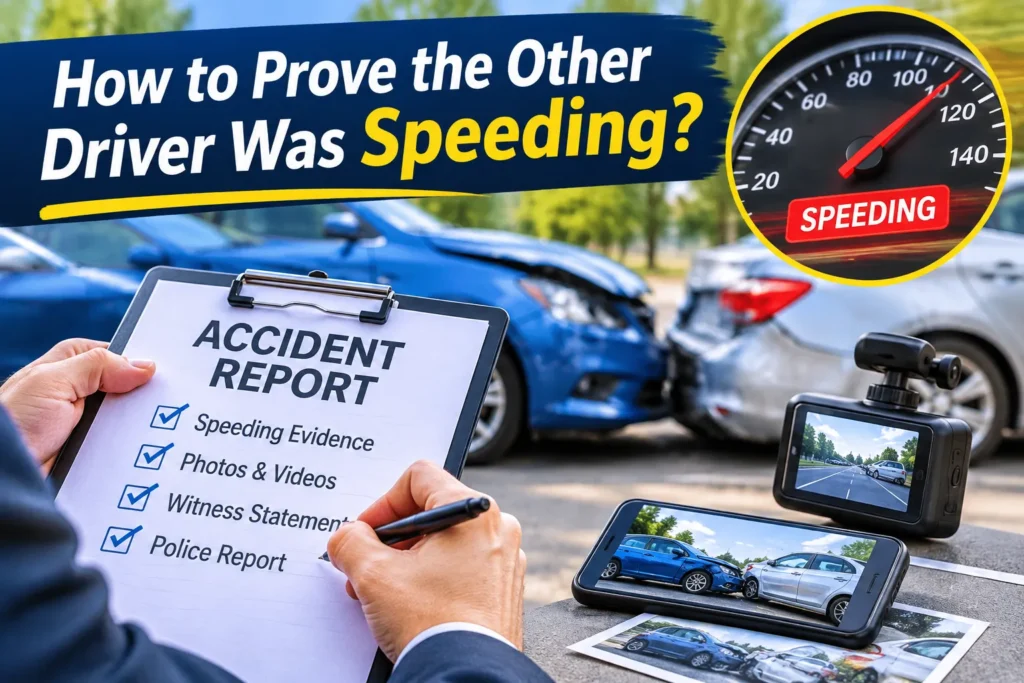
Evidence of speeding may involve providing proof as to the speed of the vehicle and the circumstances of the collision.
The following are examples of evidence that can be useful:
- Police accident reports.
- Traffic camera footage.
- Dashcam recordings.
- Eyewitness statements.
- Damage to the vehicle and skid marks.
- Reports by experts in Accident Reconstruction.
This evidence of speeding in a car accident can help establish negligence and support a claim
Can You Sue Someone for Speeding?
Yes. If a speeding driver is involved in an accident, and there are injuries or property damage, the injured party may have a claim for damages.
A car accident caused by speeding may support a compensation claim for medical expenses, lost wages, vehicle repairs, and other eligible damages. They can be reviewed by an attorney and discussed with the attorney regarding any legal options that may be available.
How Does Comparative Negligence Work in New Jersey?
New Jersey has a modified comparative negligence statute. N.J.S.A. 2A:15-5.1 requires that an injured person be permitted to obtain damages when he/she is at fault no more than the party or parties he/she is suing. Compensation is reduced according to their percentage of responsibility.
In this instance, if an individual is responsible for 20% of the accident and they sustain a damage award of $50,000, they could only recover $40,000.
How Do You File an Insurance Claim Against a Speeding Driver?
After a car accident caused by speeding, victims may file a third-party claim against the at-fault driver’s insurance company.
The process generally involves:
- Reporting the accident to the insurer.
- Providing the police report and supporting evidence.
- Submitting medical records and repair estimates.
- Documenting lost income and other expenses.
- Reviewing the insurer’s settlement offer.
New Jersey also has specific no-fault insurance rules for medical expenses, so the correct claim route depends on the type of loss and available coverage.
What Compensation Can Accident Victims Receive?
Depending on the circumstances, a car accident caused by speeding may result in compensation for:
- Medical bills and rehabilitation.
- Lost wages and reduced earning ability.
- Vehicle repair or replacement.
- Pain and suffering, where legally recoverable.
- Other accident-related financial losses.
The amount depends on the injuries, evidence, insurance coverage, and applicable legal rules.
What Should You Do After a Speeding Accident?
Taking the right steps can protect your health and legal rights:
- Seek medical attention immediately.
- Contact the police and report the collision.
- Photograph the vehicles, injuries, and accident scene.
- Collect witness and driver information.
- Keep medical bills, receipts, and repair records.
- Speak with a qualified New Jersey car accident attorney.
A car accident caused by speeding can involve complicated insurance and liability questions. Preserving evidence early can help protect a potential claim.
Frequently Asked Questions
Can speeding alone prove a driver was negligent?
Speeding can be evidence of negligence, but the injured person generally must also establish that the driver’s conduct contributed to the accident and caused actual damages.
How do police determine whether someone was speeding?
Police can analyze the skid marks, vehicle damage, road and weather conditions, witness statements, surveillance video, and other evidence to determine the driver’s speed.
Can I file a claim if the speeding driver was not ticketed?
Yes. You don’t always have to have a traffic ticket in order to seek compensation. Witness statements and accident reconstruction results could also be used to determine liability.
How long do I have to file a car accident lawsuit in New Jersey?
Most personal injury cases in New Jersey are time-barred after two years, though exceptions may exist, especially when the injured party is a public entity or for special circumstances. There is legal advice available to help determine the right time.
Does insurance cover accidents caused by speeding?
Depending on the driver’s insurance policy, coverage, and liability, insurance may cover accident-related losses. The insurance provider will go through an investigation process to find out what it has to pay.
What if both drivers were speeding?
Both drivers may share responsibility. New Jersey’s comparative negligence rules determine whether an injured person can recover damages and how much compensation may be reduced.
Can I claim compensation for emotional distress?
Emotional distress can be a part of a personal injury lawsuit depending on the situation and the relevant law. Medical documentation and evidence of its impact can help support the claim.
What if the speeding driver has no insurance?
There can be other legal resources available, or you may have options through the uninsured motorist coverage. The options that apply will depend on the policy and the circumstances of the collision.
Should I accept the insurance company’s first settlement offer?
Be sure to read the offer thoroughly before accepting it. Factor in medical costs, future care, loss of income, and other damages as a settlement could impact your ability to pursue more damages in the future.
Do I need a lawyer after a speeding accident?
An attorney can begin investigating the collision, obtain the evidence, determine who is at fault, talk to insurance companies, and provide you with guidance on what steps you may take next if you have been seriously injured or the accident was not your fault.